2026 Toyota RAV4 Woodland PHEV Has the Look
June 16, 2026
Oh, to be as popular as Toyota’s RAV4. Over the past five years, it's been America's best-selling passenger vehicle, and Toyota's sixth-generation redesign isn't interested in disrupting that success. Want one of these? Get in line. Blame high gas prices and Toyota's reputation for reliability.
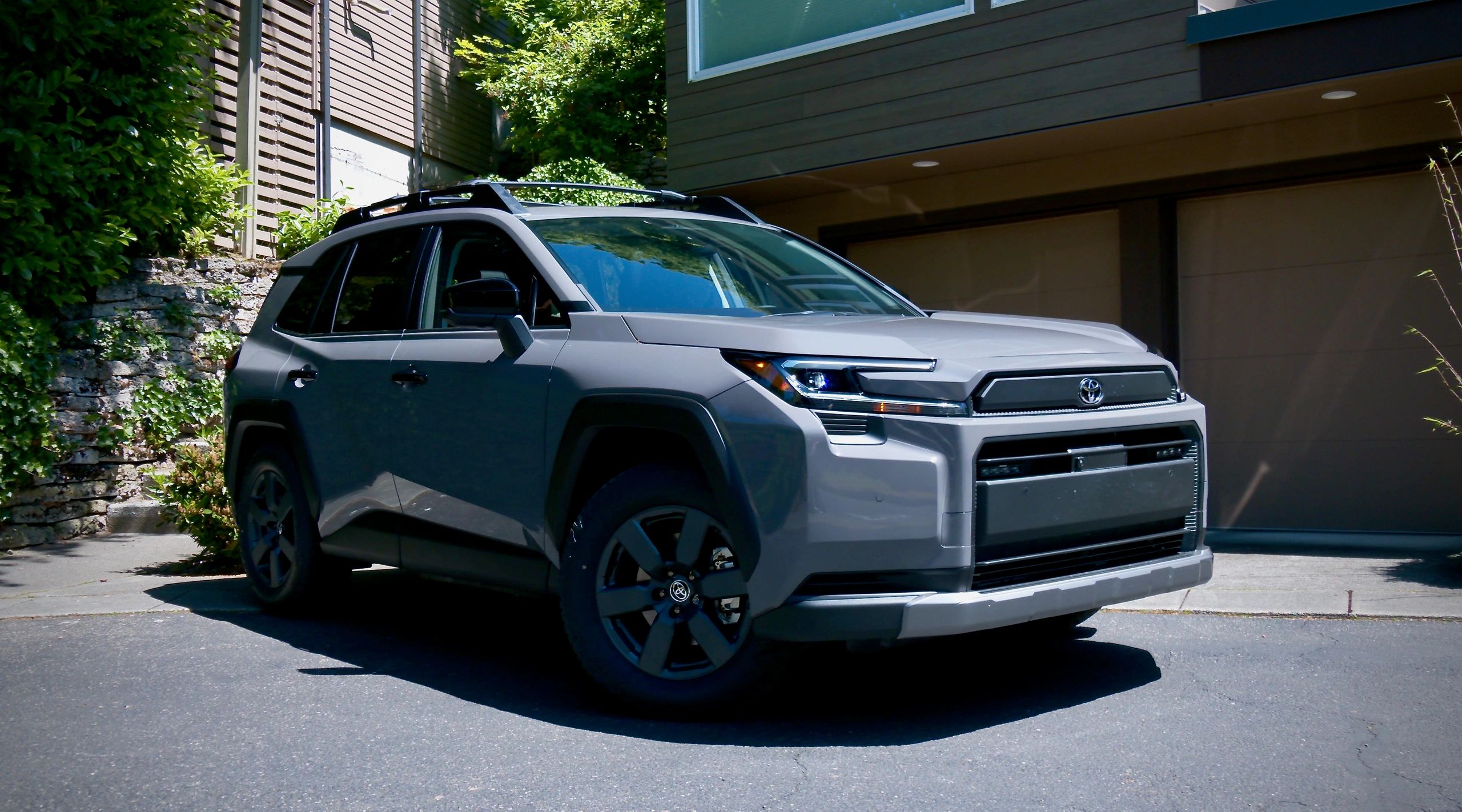
Maybe you’ve heard, every RAV4 is now electrified, HEV or PHEV. The most interesting version might be the plug-in hybrid, formerly known as Prime. Tested here in Woodland trim, it combines genuine electric driving capability with mild off-road ambitions and enough practicality to keep families happy.
The headline number is 49 miles of electric-only range. For many owners, that's enough to cover daily commuting without burning a drop of gasoline. Once the battery is depleted, the Woodland seamlessly transitions into a conventional hybrid rated at 37 mpg.
At roughly $47,000 including destination, the Woodland Plug-In costs about $5,400 more than the standard Woodland Hybrid. Whether that premium pays for itself depends largely on local gas and electricity prices. But economics aren't the only reason to consider it. The plug-in powertrain is substantially stronger.
A 2.5-liter four-cylinder engine works with front and rear electric motors to produce 324 horsepower, a healthy 88-hp advantage over the standard hybrid. Toyota doesn't publish a combined torque figure, but the result is immediately noticeable. The standard hybrid reaches 60 mph in a little over seven seconds; the plug-in trims roughly two seconds from that sprint.
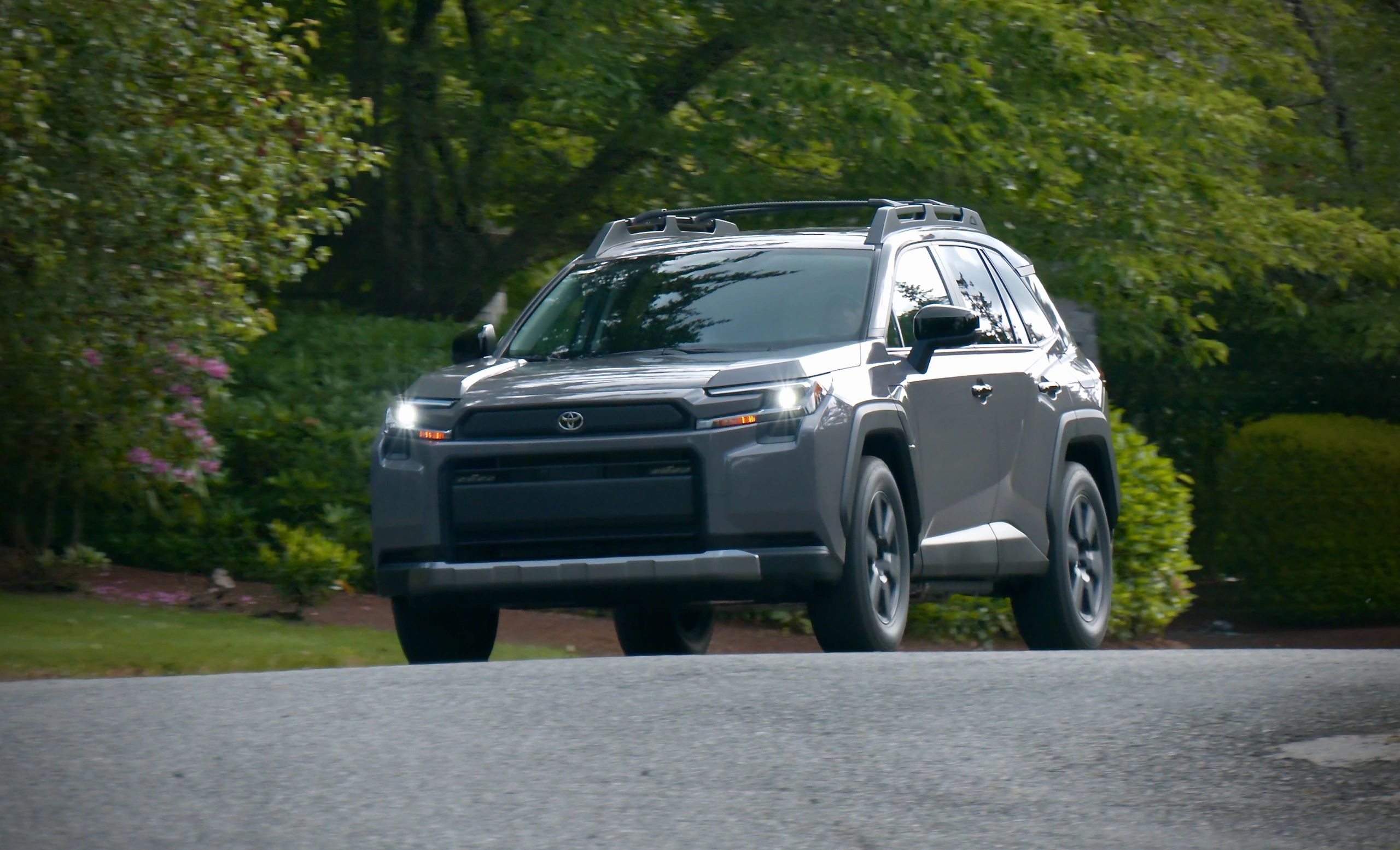
More importantly, it feels smoother and more refined. Around town in EV mode, the Woodland behaves much like a battery-electric vehicle—quiet, responsive, and moderately brisk. Push harder and the gasoline engine joins the party, delivering strong acceleration with a 0-60 sprint in the neighborhood of five seconds. The 22.7-kWh battery pack adds roughly 550 pounds, pushing curb weight to around 4,500 pounds. Fortunately, Toyota's chassis tuning masks much of that heft.
Charging is straightforward. Woodland and XSE trims receive an 11-kW onboard charger and can even use DC fast charging (GR and SE trims with 7-kW chargers can’t). But RAV’s commercial charging is quite pokey (10-80% in 35 minutes). Realistically, most owners will simply plug in at home overnight. In fact, a standard 120-volt household outlet is sufficient for many plug-in hybrid drivers, it should fully charge the pack overnight. Unlike a pure EV, there's always a gasoline backup if charging doesn't go as planned.
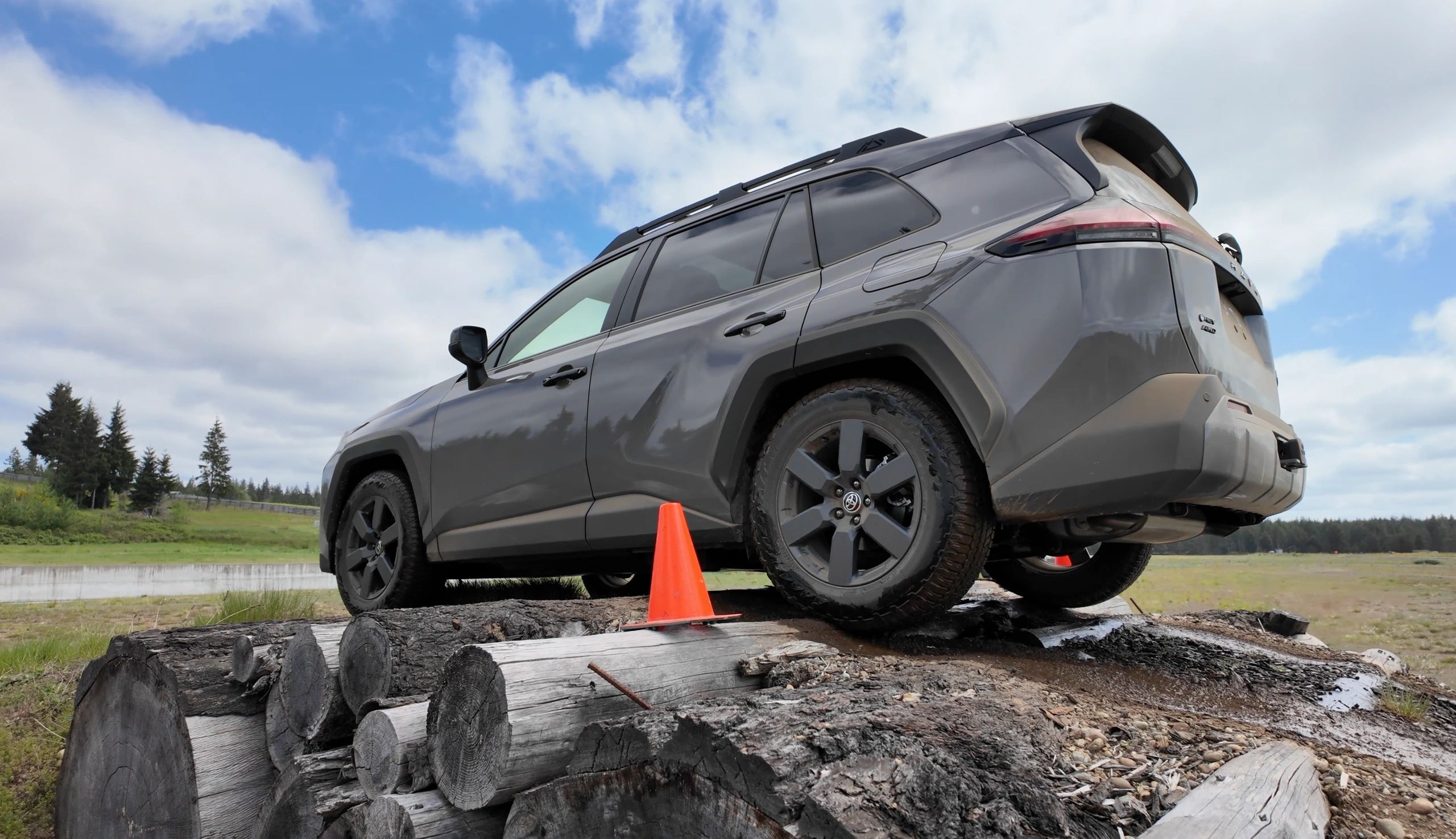
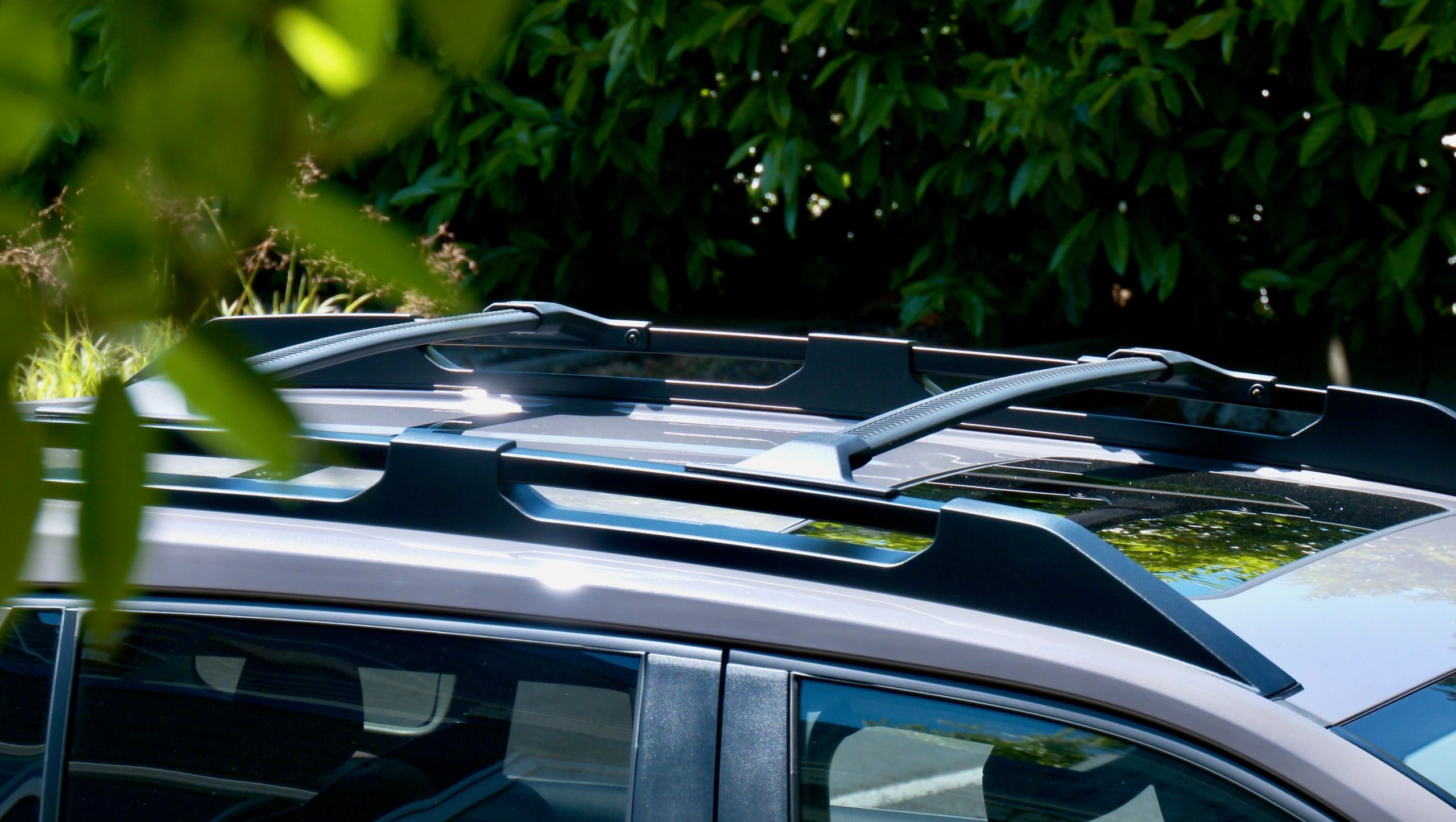
Woodland is marketed as the adventurous member of the family. It rides on all-terrain tires, gets 8.5 inches of ground clearance, and wears rugged styling cues, including a beefy roof rack. Buyers expecting serious trail hardware may be disappointed. Underbody protection remains minimal, making Woodland more lifestyle package than hardcore off-roader.
And that’s okay. Most RAV owners spend far more time navigating Costco parking lots than rocky mountain passes. In everyday pavement pounding, the ride quality is notably comfortable, helped by the taller tire sidewalls. Handling remains composed, with only modest body roll and understeer when pushed. Brake blending between regenerative and friction braking is nearly seamless, something not every electrified vehicle can claim.
During off-road testing at NWAPA's Mudfest event, Woodland handled the rough course with ease. Woodland is a solid hiking buddy . Keep in mind, the terrain resembled a neglected forest service road rather than a rock-crawling challenge, and the plug-in's extra power over the standard hybrid system was welcome. And the lack of engine noise allows drivers to hear rustling leaves and chirping birds. Nature appreciates quiet.
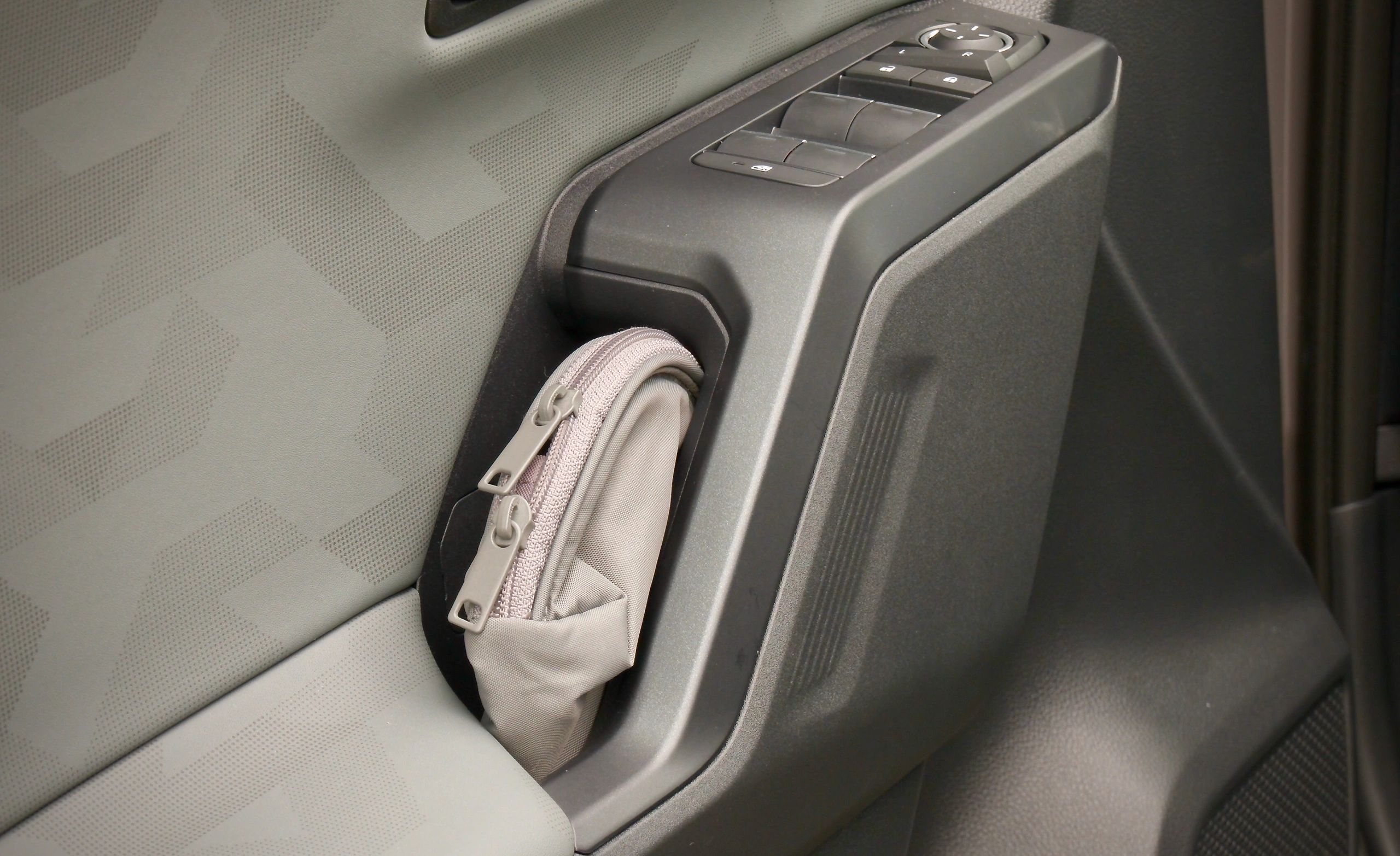
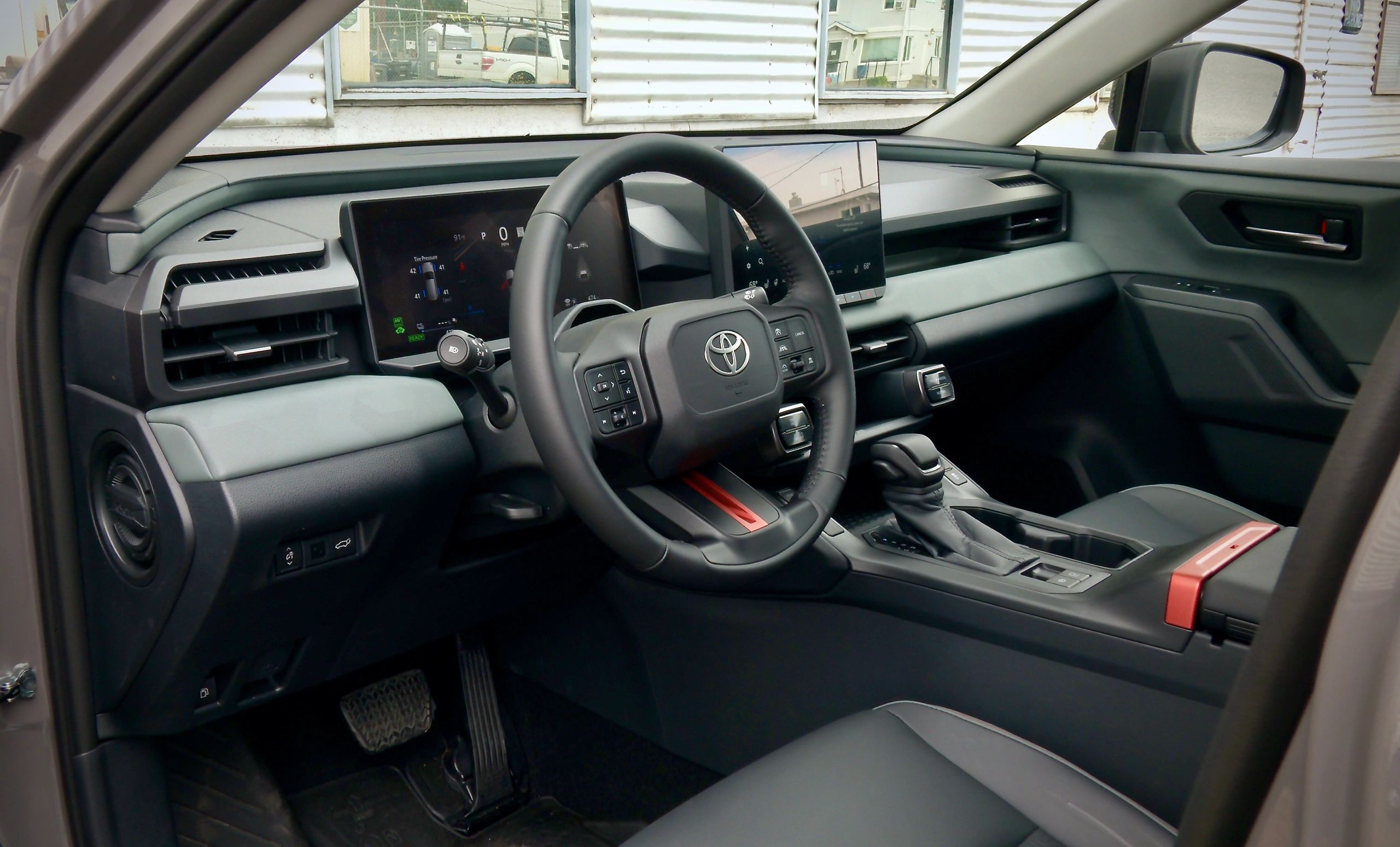
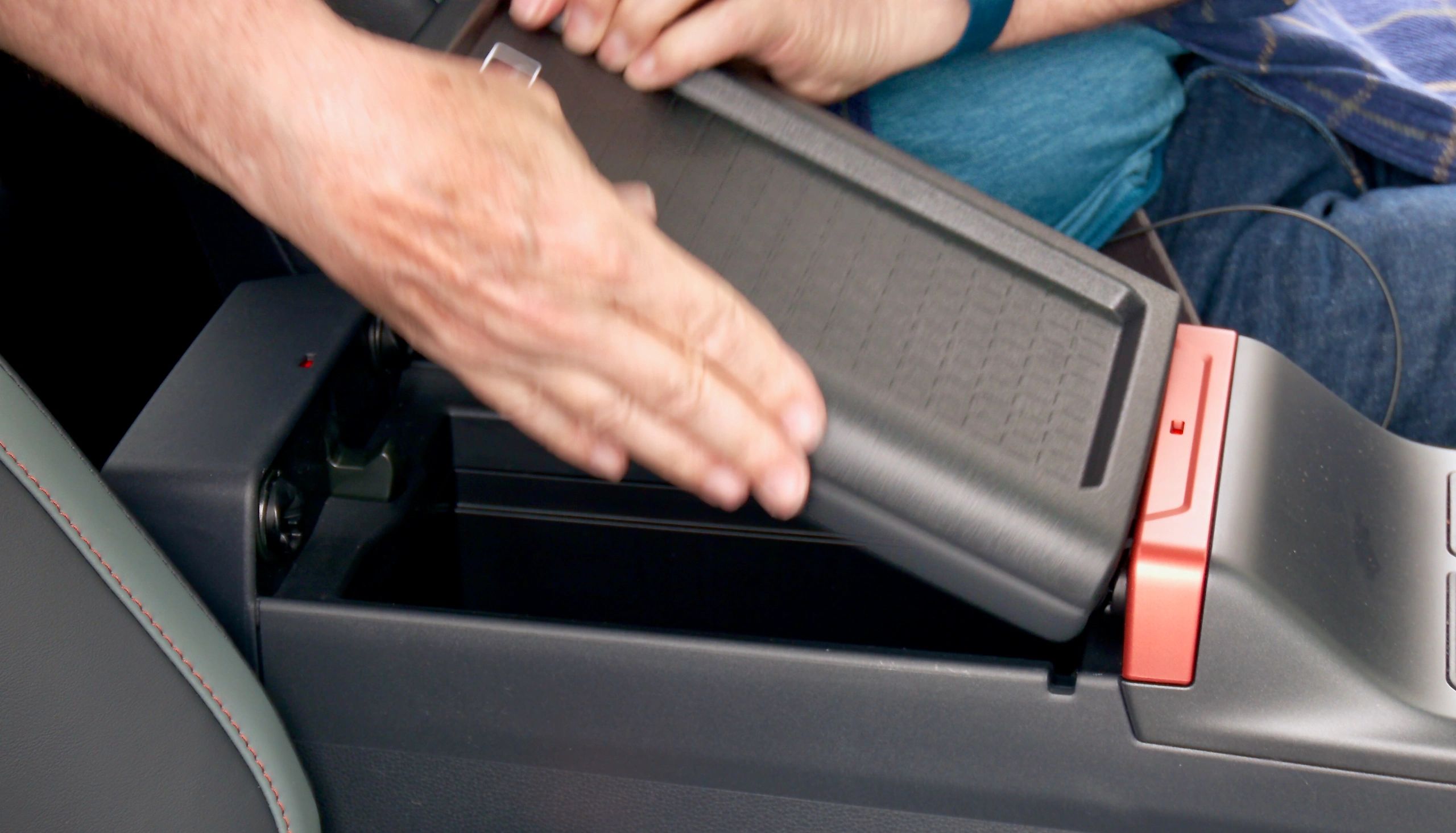
Inside, Toyota masters practical packaging. Storage cubbies are everywhere. The door pulls double as storage nooks. A clever center-console lid flips around to become a tray table. A removable flashlight is tucked away for camping duties. Someone in Toyota's engineering department must actually go outdoors.
The downside is ambiance. For a vehicle approaching $50,000, the cabin feels surprisingly drab. Hard plastics dominate many surfaces. Competitors such as the Hyundai Tucson and Kia Sportage offer richer materials and a more upscale atmosphere. Heated SoftTex seats are comfortable, RAV4 chairs are leather-free across all trims. But overall, Mr. Popular RAV feels a grade lower than expected. Maybe two.
Technology is improved thanks to Toyota's new Arene software platform. The infotainment system features a home screen now. Something Toyotas lacked for the past five years. There’s quick responses, and a sensible mix of touchscreen and physical controls. Wireless Apple CarPlay and Android Auto are standard, and the wireless charging pad actually works—a statement that unfortunately still qualifies as praise in 2026.
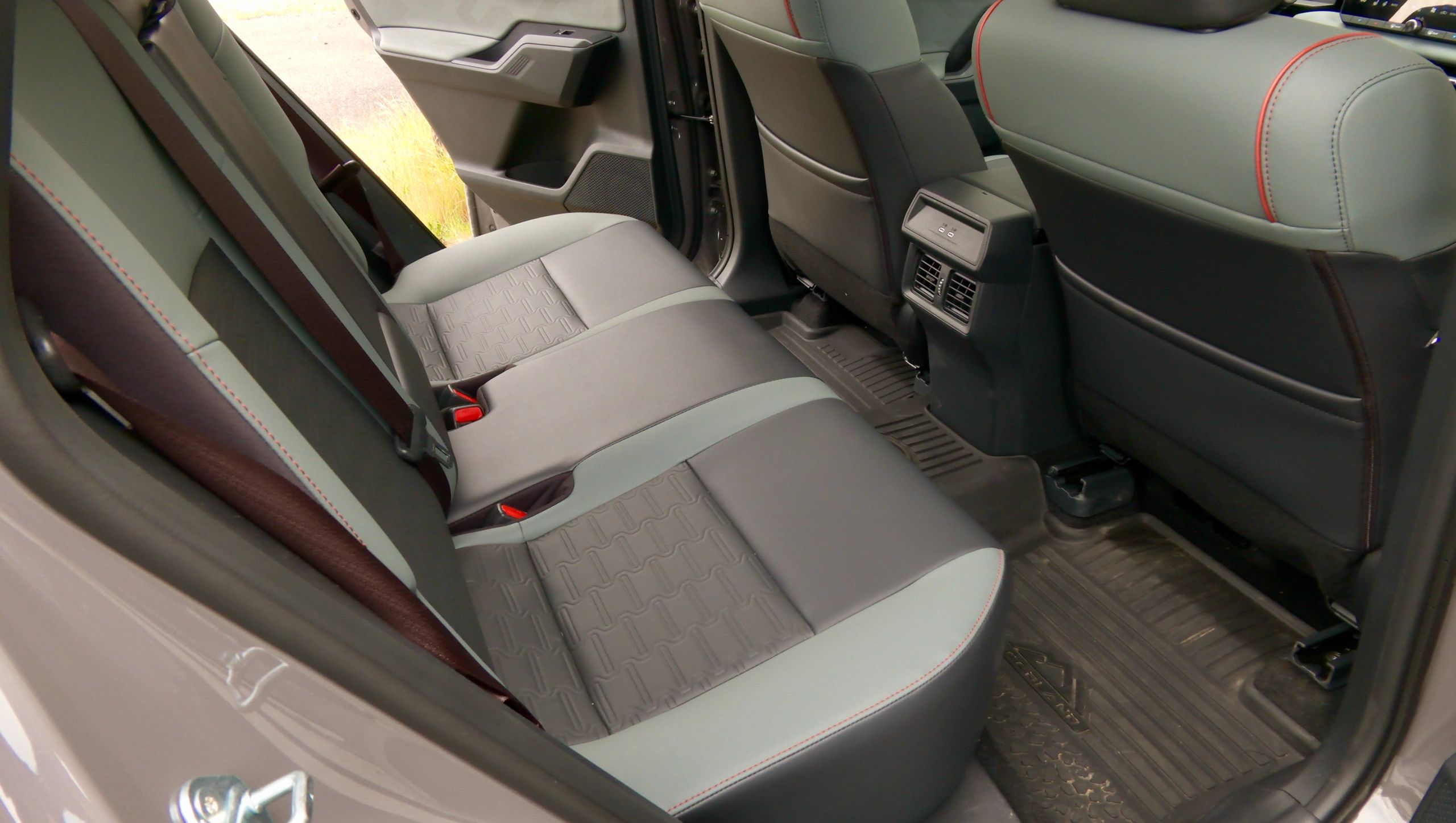
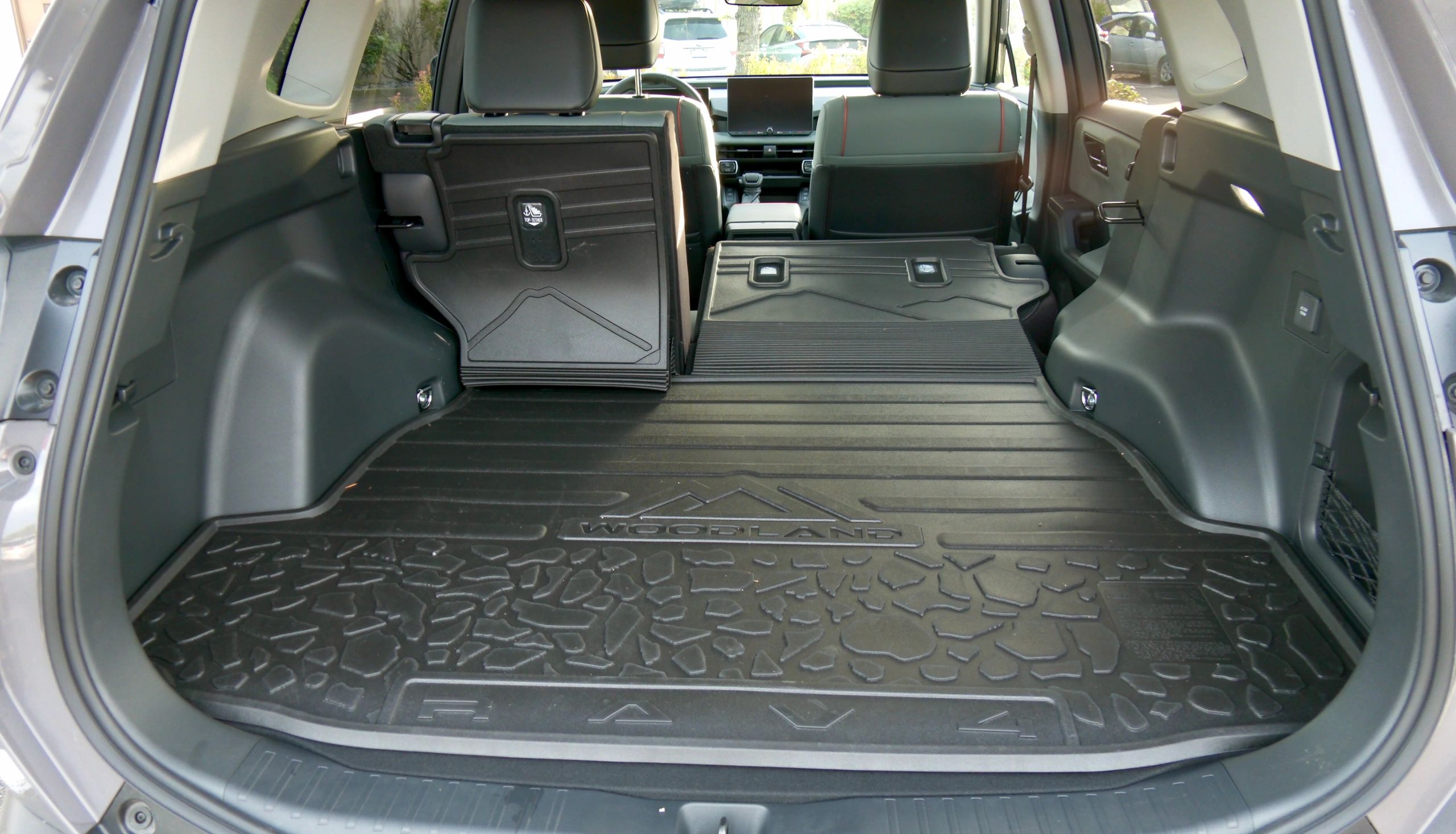
Rear-seat accommodations are family-friendly, with ample headroom and legroom for adults. Cargo space remains generous at nearly 38 cubic feet behind the second row and about 70 cubic feet with seats folded. However, the plug-in loses roughly four cubic feet compared with standard hybrid models due to battery packaging. Chances are you won’t miss the space.
The 2026 Toyota RAV4 Woodland Plug-In Hybrid succeeds because it doesn't ask owners to radically change their lives. It can function as an EV for daily driving, a hybrid for long road trips, and a capable adventure vehicle on weekends.
Drawbacks?. Even though Toyota is historically known for reliability, the plug-in system adds complexity. Cargo space shrinks slightly, and recouping the price premium depends on local gas and electricity costs. Wind noise from Woodland’s roof rack can be annoying, and interior quality doesn't fully justify the sticker price.
Still, the new Woodland PHEV, like all RAV4s, should prove as popular as the outgoing generation. Anecdotally, I’m hearing many dealerships are padding the MSRP due to demand. I believe that’s called the free-market economy. The PHEV is quicker, smoother, and significantly more efficient than the HEV RAV4. In a market increasingly crowded with electrified choices, Toyota has created a vehicle that doesn't force owners to choose between electricity and practicality.
For many buyers, that's exactly the point.