2026 Mazda CX-5: Growing Up Without Growing Old
June 16, 2026
Mazda CX-5 owners are a loyal bunch, and for good reason. When the original debuted in 2012, it introduced the company’s elegant Kodo design language and the driving dynamics proved that a compact crossover didn’t have to be dull. The second generation arrived in 2016 and stuck around for nearly a decade, aging more gracefully than most vehicles in its class.
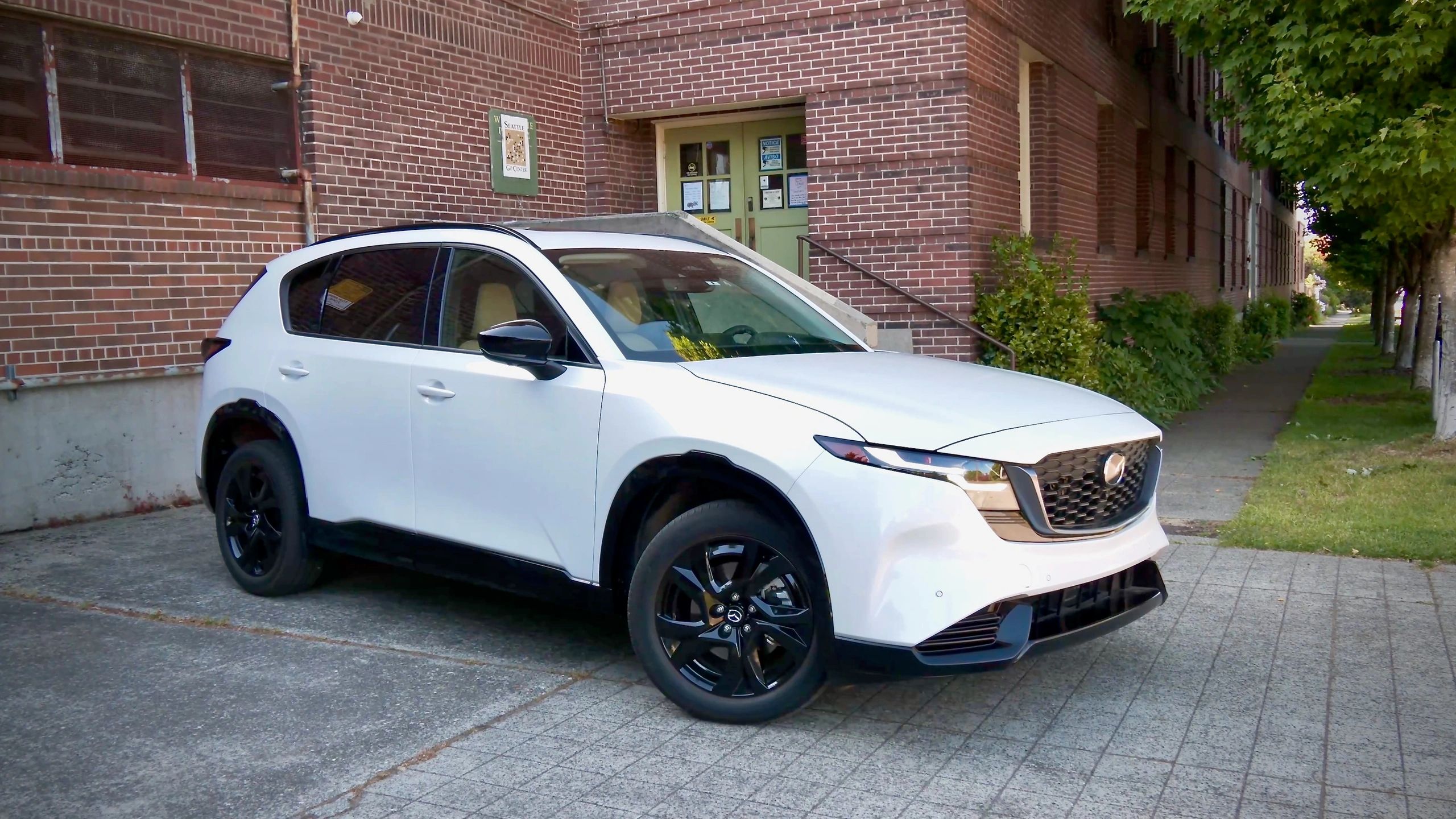
Now comes the third-gen 2026 Mazda CX-5. Built on an all-new architecture, the latest version stretches its wheelbase by more than four inches, promising improved passenger space and cargo capacity. It also introduces a new user interface and a more premium approach as Mazda continues its quest to move upscale.
CX-5 squares off in the industry’s most competitive segments against heavyweights like Toyota RAV4, Honda CR-V, Nissan Rogue, Chevrolet Equinox and Ford Bronco Sport. It also faces an unusual rival parked in the same showroom: Mazda’s own CX-50.
Mazda executives describe the CX-50 as rugged and outdoorsy while positioning the CX-5 as urban and sophisticated. The distinction exists, though shoppers may need a moment to sort out which is which. Both start around $31,500 including destination and are now similar in size.
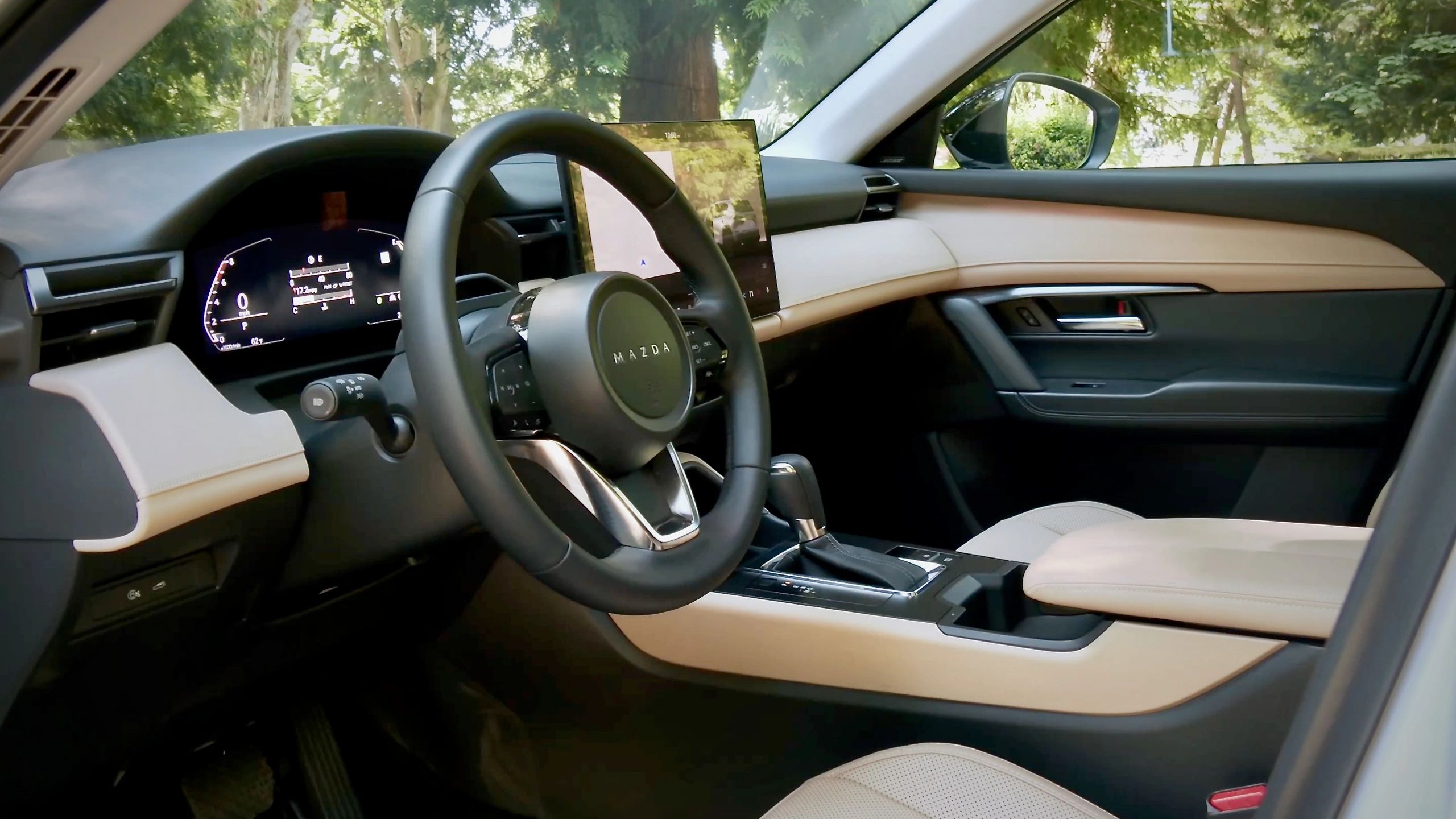
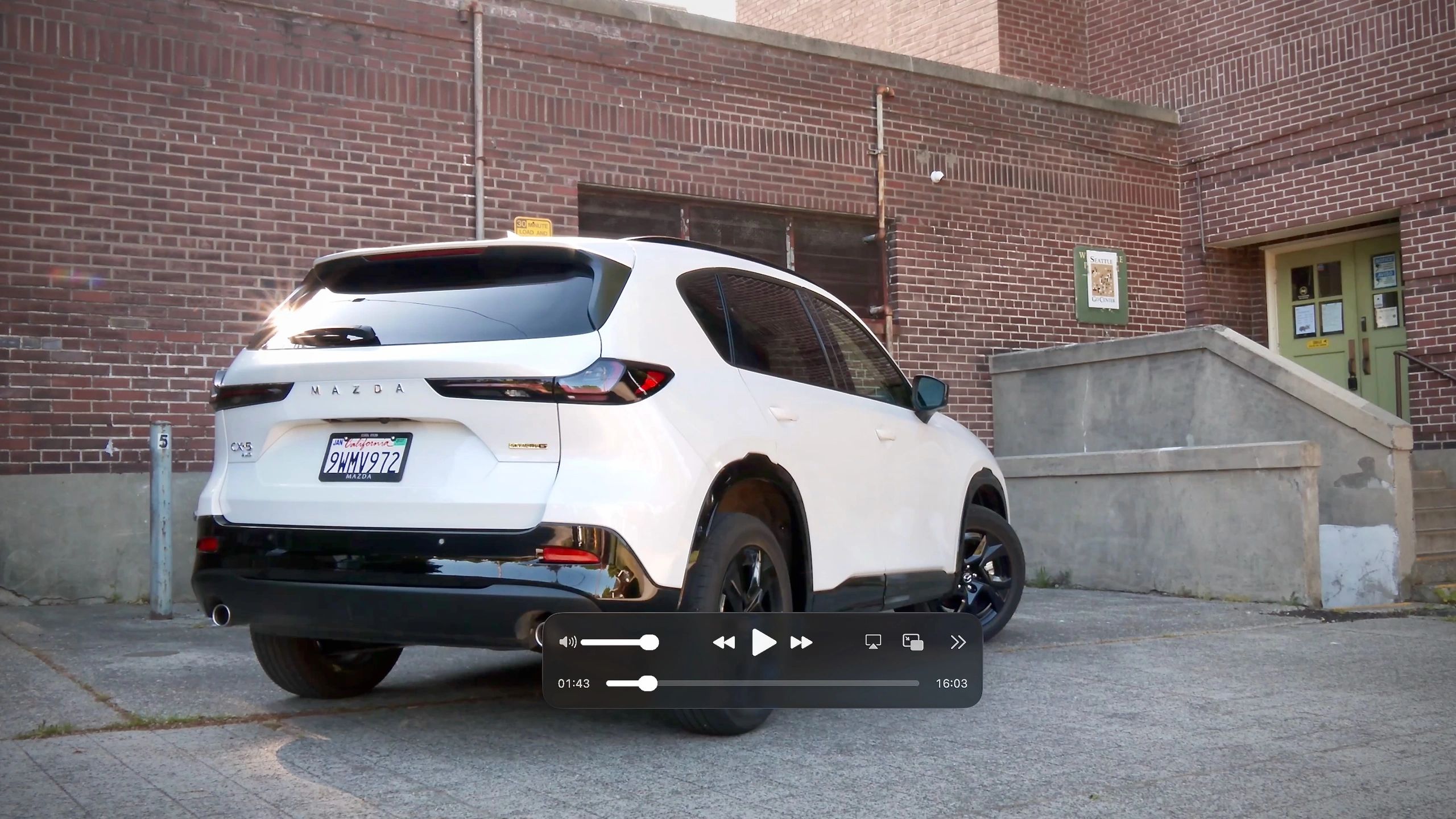
Mt tester is the range-topping Premium Plus, stickering at $41,300 with Rhodium White paint. It includes a hands-free power liftgate, additional driver-assistance technology and a larger 15.6-inch center display.
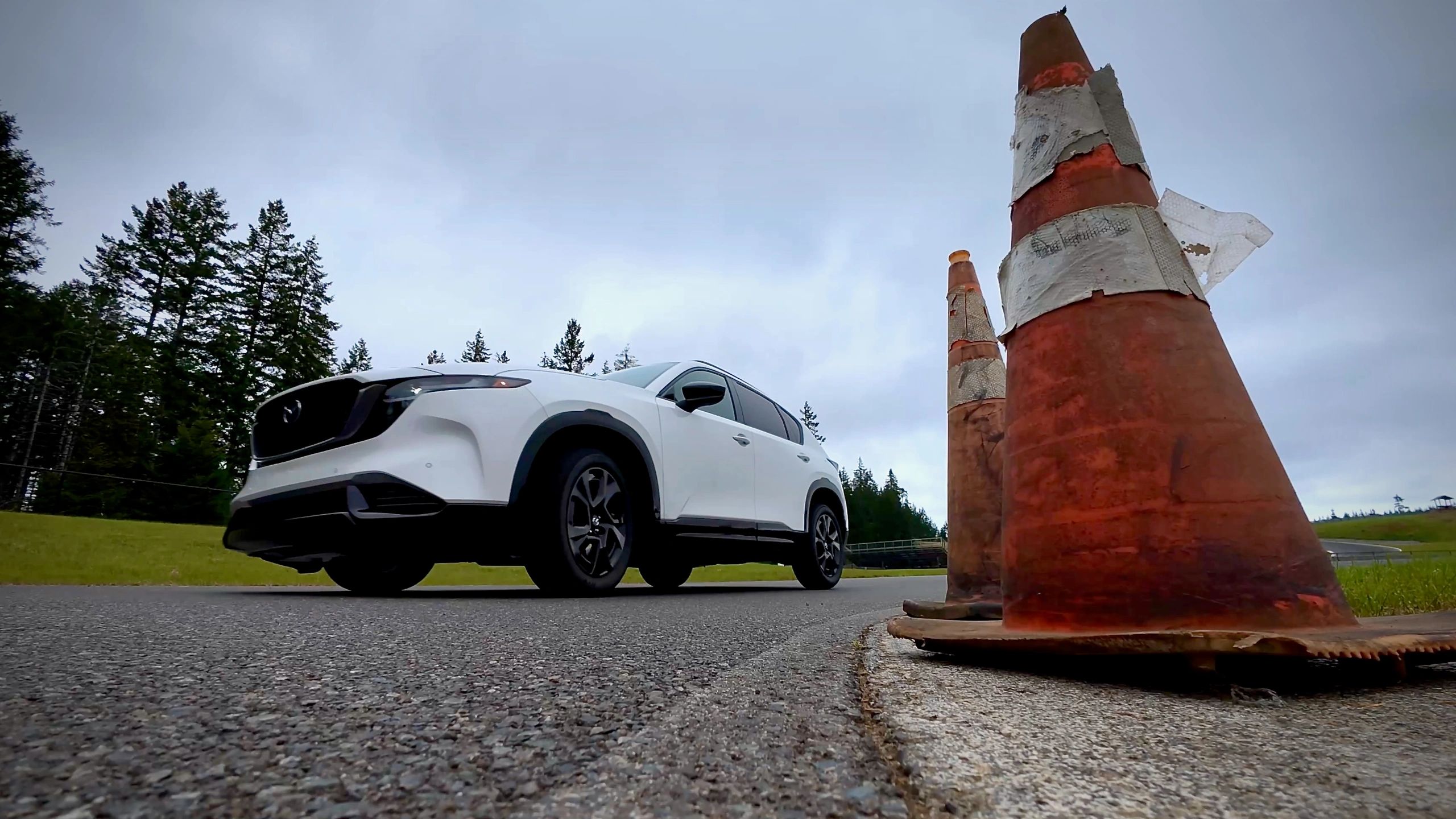
At NWAPA’s Mudfest 2026 event, held at The Ridge Motorsports Park, the CX-5 quickly became a favorite in the slalom and on the kart track. No, it’s not a sports car. But among compact crossovers, it stands out, along with Volkswagen’s Tiguan.
A big part of that comes from Mazda’s G-Vectoring Control Plus system. By subtly adjusting engine torque and braking forces during cornering, it improves front tire grip on turn-in and stabilizes the vehicle mid-corner. Drivers never feel the technology working; they simply notice that the CX-5 feels composed and eager.
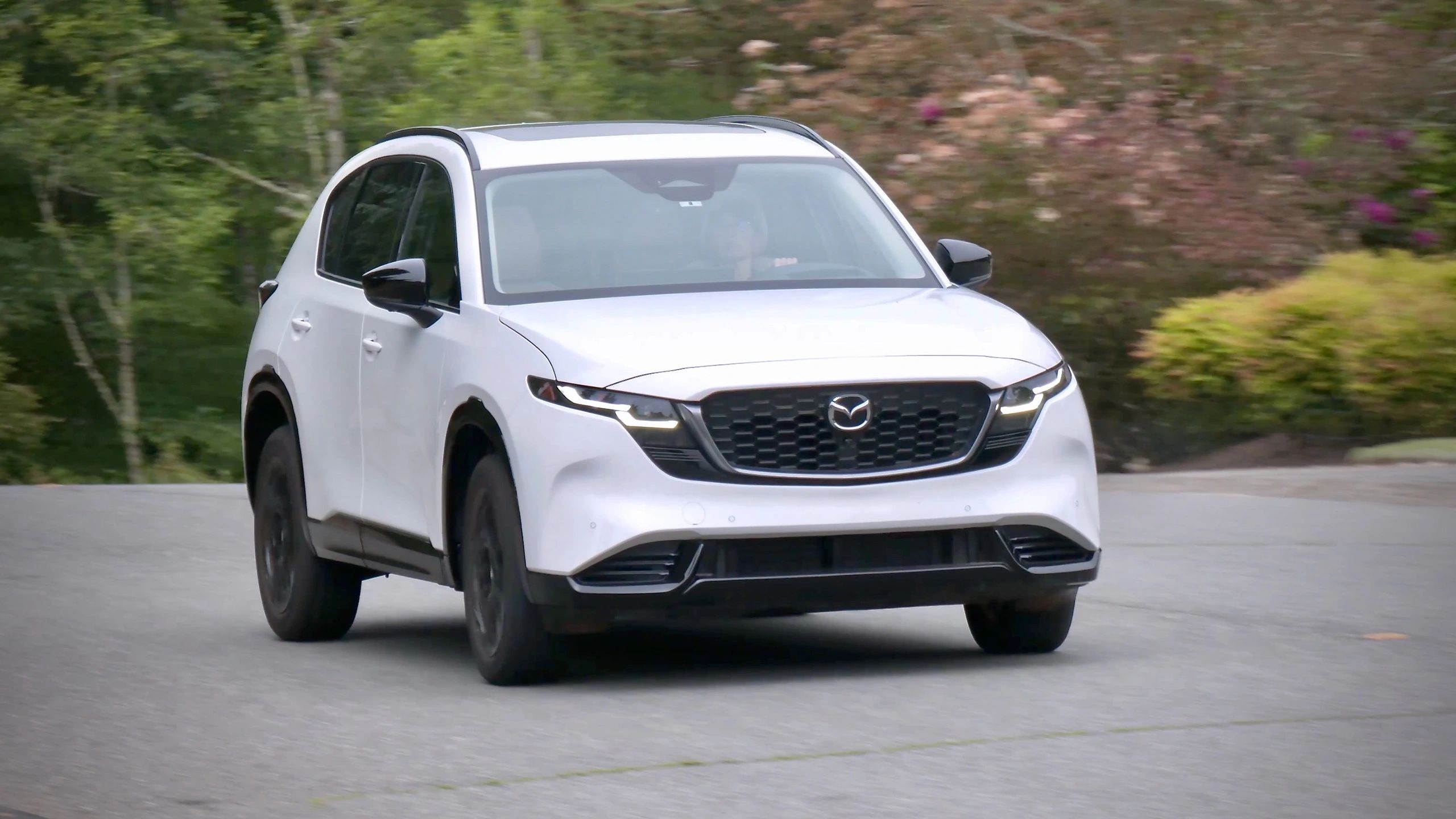
Steering is direct and nicely weighted, though Sport mode may be a touch heavy for some tastes. Not mine. Even with 8.2 inches of ground clearance that should mess with handling, it’s about as entertaining as a practical family crossover gets.
Power comes from a naturally aspirated 2.5-liter four-cylinder producing 187 horsepower and 186 lb-ft of torque. All-wheel drive is standard across the lineup. Unlike the CX-50, which offers turbocharged and hybrid options, the CX-5 currently gets only this engine. A hybrid is expected for 2027.
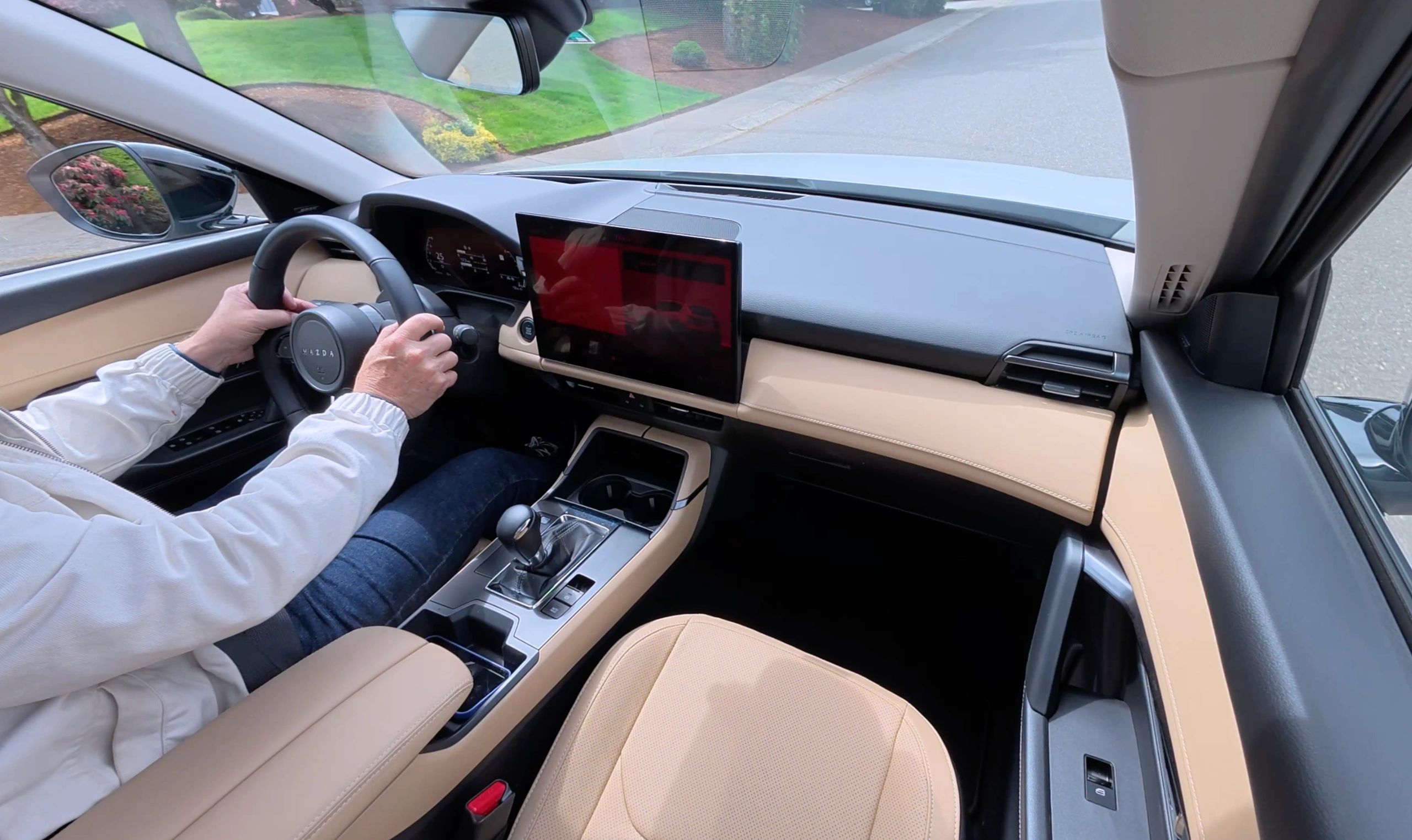
Acceleration is adequate rather than exciting. Expect 0-60 mph in a little over eight seconds, roughly average for the segment. More power would be welcome for highway merging and passing maneuvers, but Mazda has traditionally prioritized balance over brute force. The MX-5 Miata isn’t fast by modern standards either, yet remains a joy to pilot. That’s the philosophy with the CX as well.
The six-speed automatic transmission deserves praise. While competitors increasingly rely on continuously variable transmissions, Mazda sticks with a conventional automatic that shifts smoothly and responds quickly when extra power is requested.
The CX-5’s greatest strength may be how well it blends comfort and handling. Not compromises them—blends them. Ride quality is composed without feeling soft, and highway refinement is excellent. Couples who disagree about suspension tuning might find the CX-5 more effective than marriage counseling.
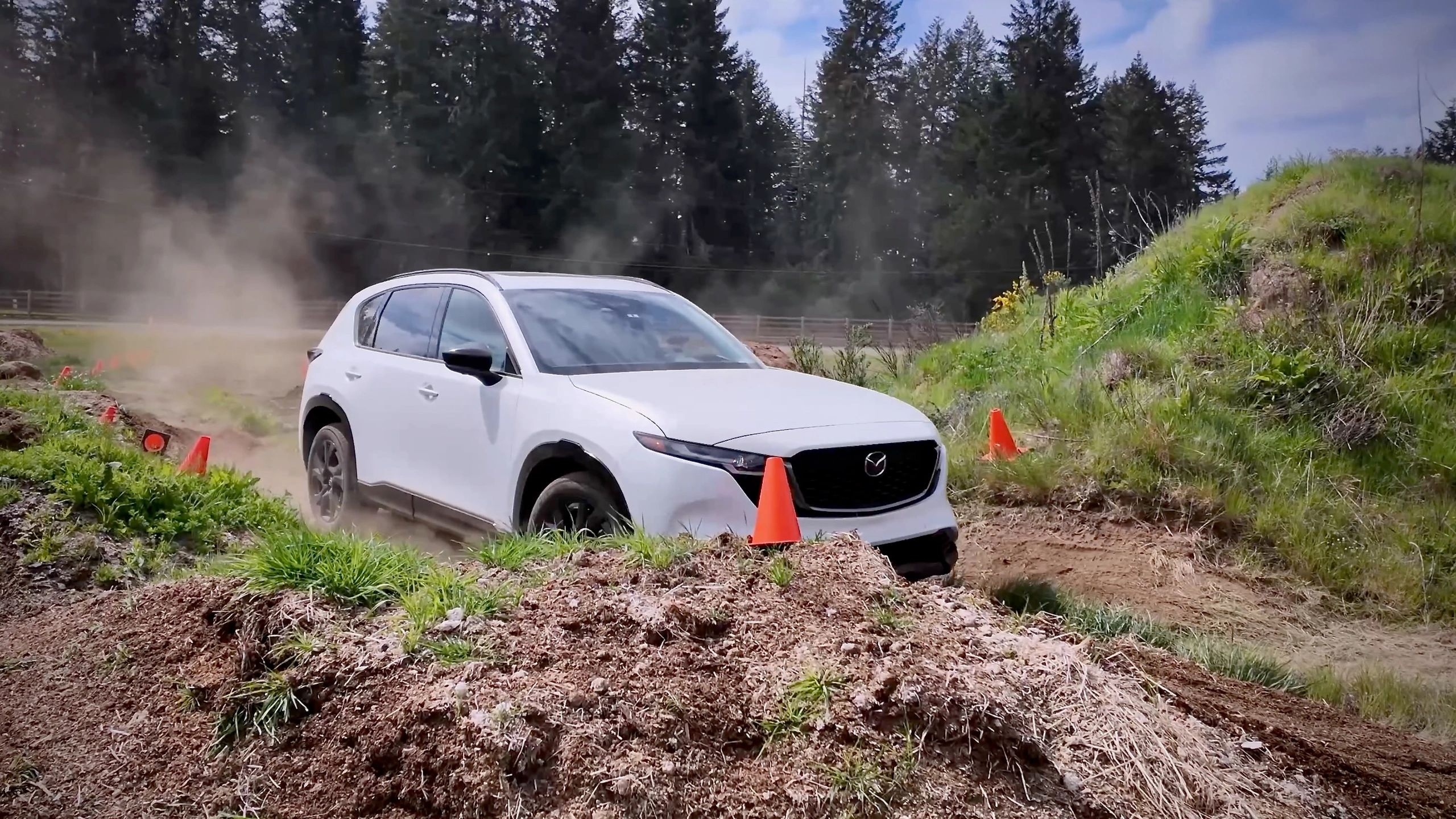
Off pavement, it performs better than most owners will ever require. At Mudfest, it tackled rough trails confidently, with the all-wheel-drive system directing power where it was needed and minimal underbody scraping despite its longer wheelbase. Few buyers will ever push it hard enough to worry about breakover angles or high-centering.
Driver-assistance technology has also improved significantly. Adaptive cruise control and lane-centering work smoothly, and the top trim adds automatic lane changes. Activate the turn signal on the highway, and the CX-5 will move over by itself once conditions are clear.
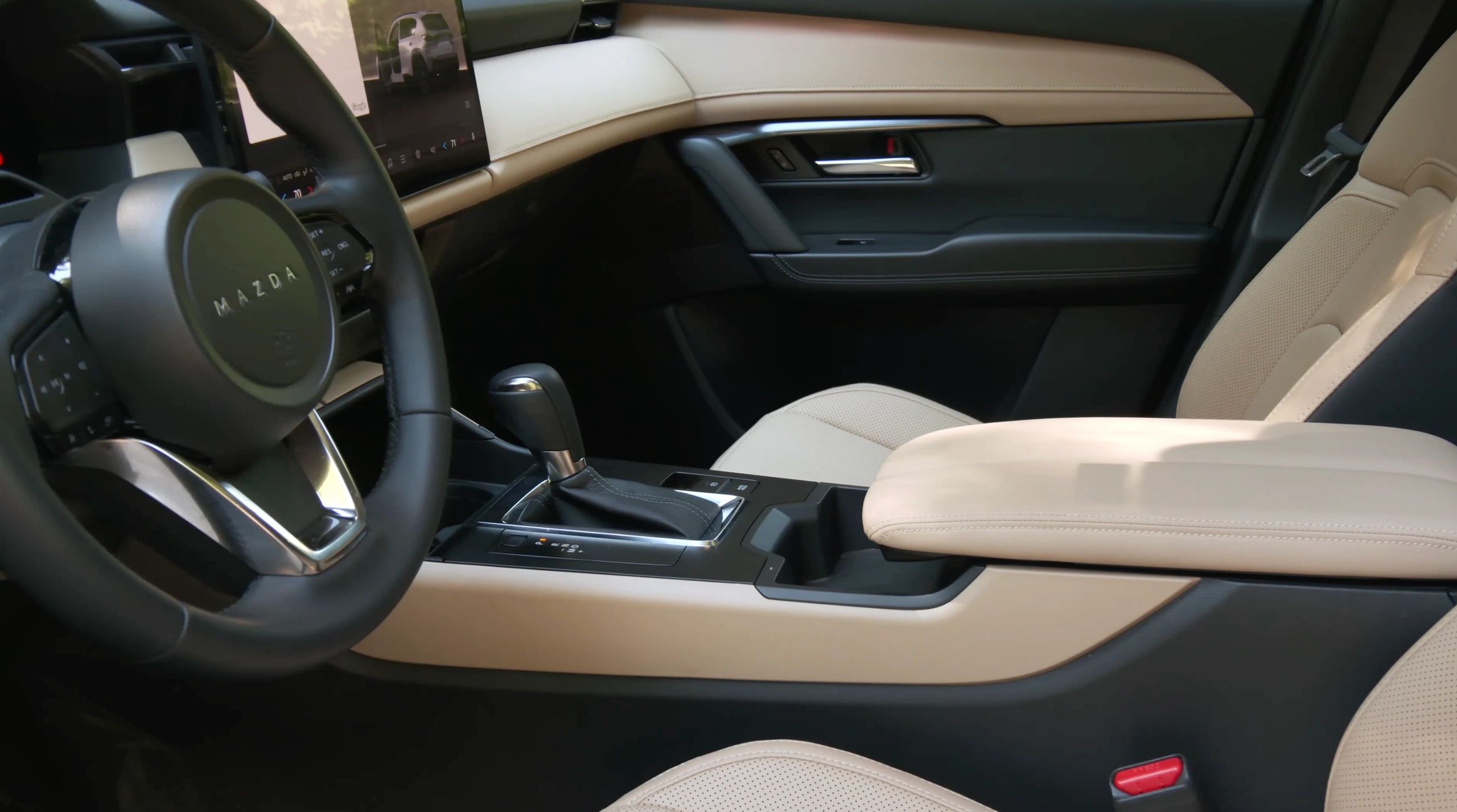
Inside, Mazda’s upscale aspirations are obvious. Materials look good. There’re soft-touch surfaces, genuine stitching and matte-finish trim replacing fingerprint-prone piano black. Ambient lighting is subtle and tasteful, while heated and ventilated leather seats reinforce the premium feel.
Not everything is luxury-grade. There’s no real wood or aluminum accents, and the Bose audio system sounds clear but lacks the richness and bass response audiophiles crave.
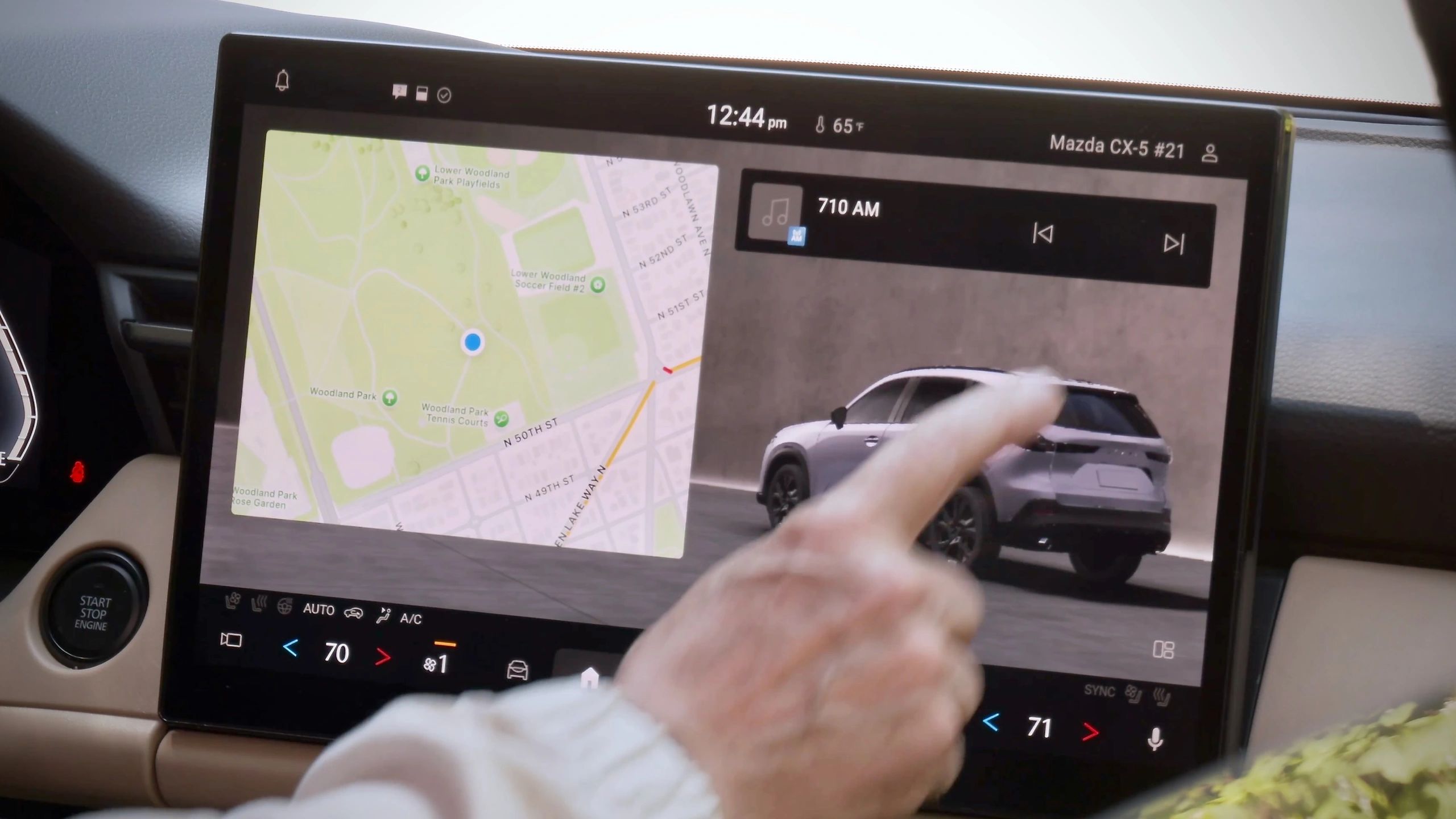
My biggest gripe is CX-5’s new touch screen-based user interface. The rotary nob has been 86ed. Sure, the display looks great, graphics are detailed and touch response impresses. But Mazda really needs to add a few hard buttons to the setup. The passenger needs to go in the menu to adjust the sound system volume. Huh? There are too many features that are too deep in the menu. Here’s hoping an OTA will bring some clarity to the system.
At least there’s wireless Android Auto and Apple CarPlay. The wireless charging pad works reliably, cupholders securely grip drinks, and storage space is plentiful.
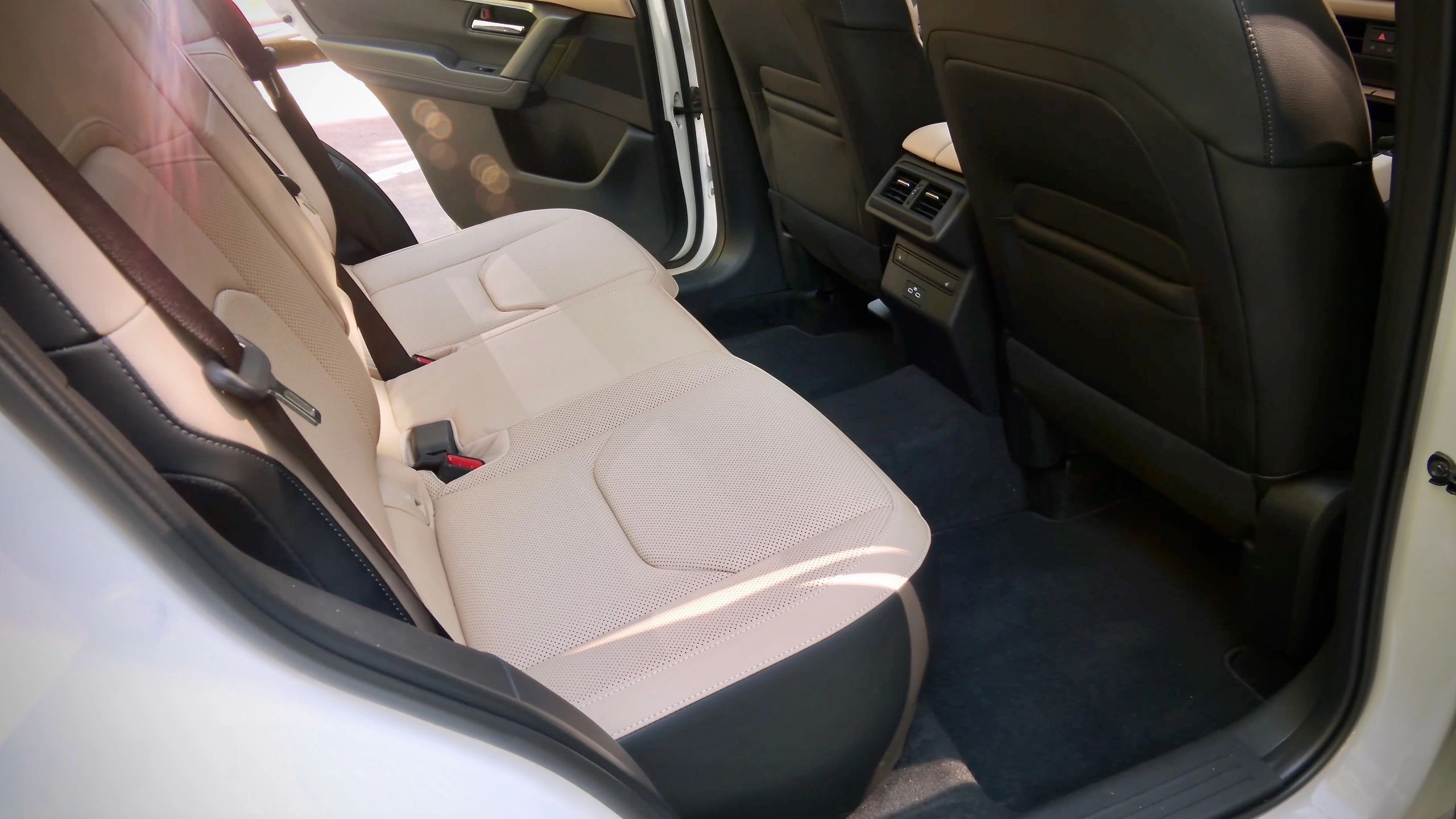
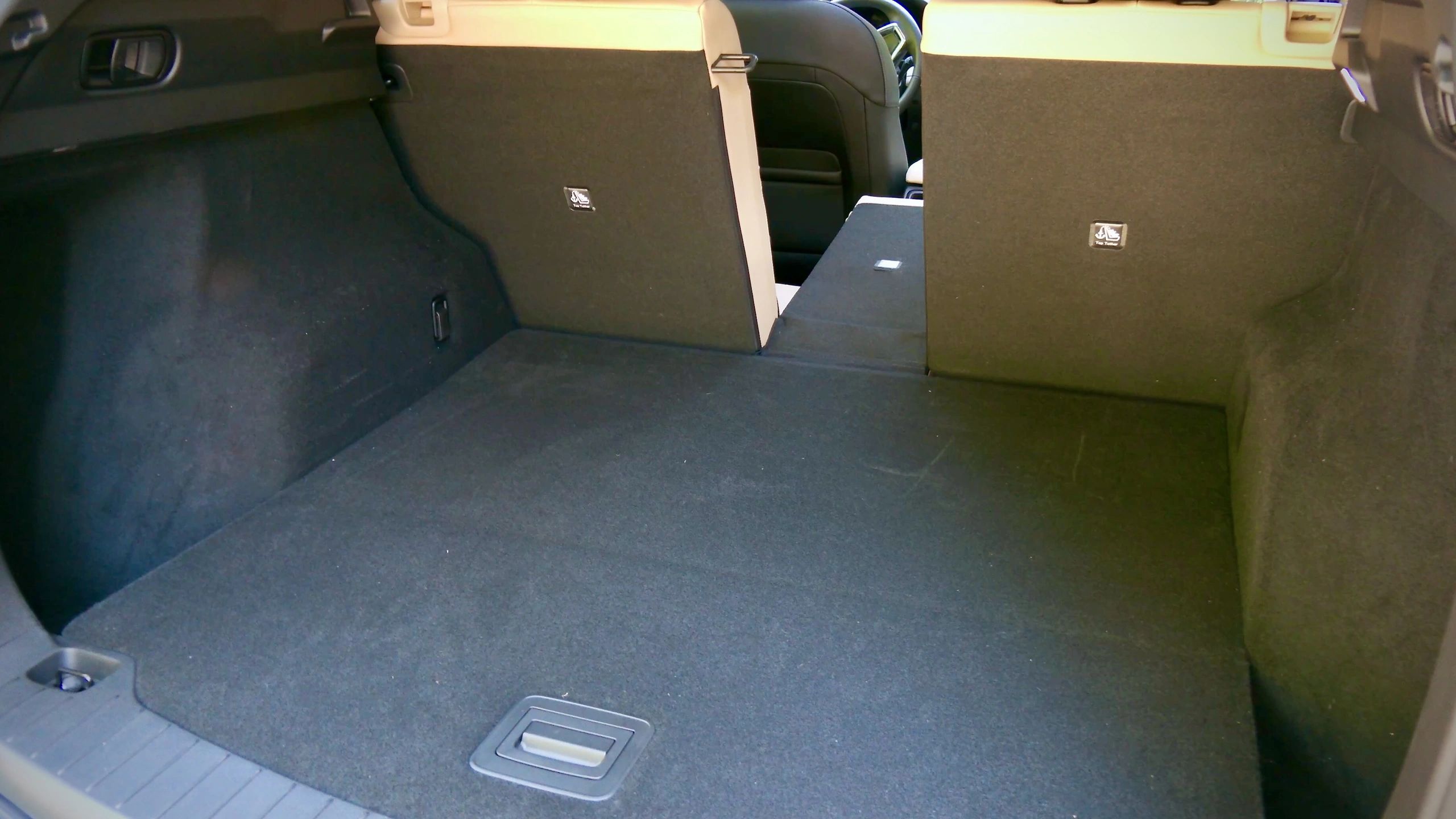
Rear-seat passengers benefit from the longer wheelbase; it’s among the most roomy in class. Plus, as tested, there are heated seats in the rear. Cargo capacity grows to 33.7 cubic feet behind the second row. That trails the Toyota RAV4’s 37.8 cubic feet but remains competitive. Folding the seats opens up 66.5 cubic feet of maximum cargo space, and the practical 40/20/40 split seatback allows long items like skis to fit while still carrying four passengers. Better yet, there’s a real spare tire beneath the cargo floor—a feature becoming increasingly rare.
The Verdict? The 2026 Mazda CX-5 doesn’t chase class-leading horsepower, maximum cargo space or fuel economy. Its EPA rating of 26 mpg combined is respectable, though hybrid competitors like Mazda’s own CX-50 can easily exceed it.
Instead, the CX-5 focuses on the qualities that made the original successful: attractive styling, engaging road manners, a quality cabin and a sense of refinement that feels a class above its price point. The redesign makes it roomier, more comfortable and more technologically advanced without sacrificing the character that earned such a loyal following.
In a segment crowded with competent transportation appliances, the 2026 Mazda CX-5 remains something increasingly rare—a crossover that drivers actually look forward to driving.