The 2027 Rivian R2 is Finally Here. Here's My Test Drive.
June 24, 2026
The Rivian R1S might have been the brand's first adventure sport ute out of the gate, but the all-new 2026 R2 is the all-electric SUV many people have been waiting for.
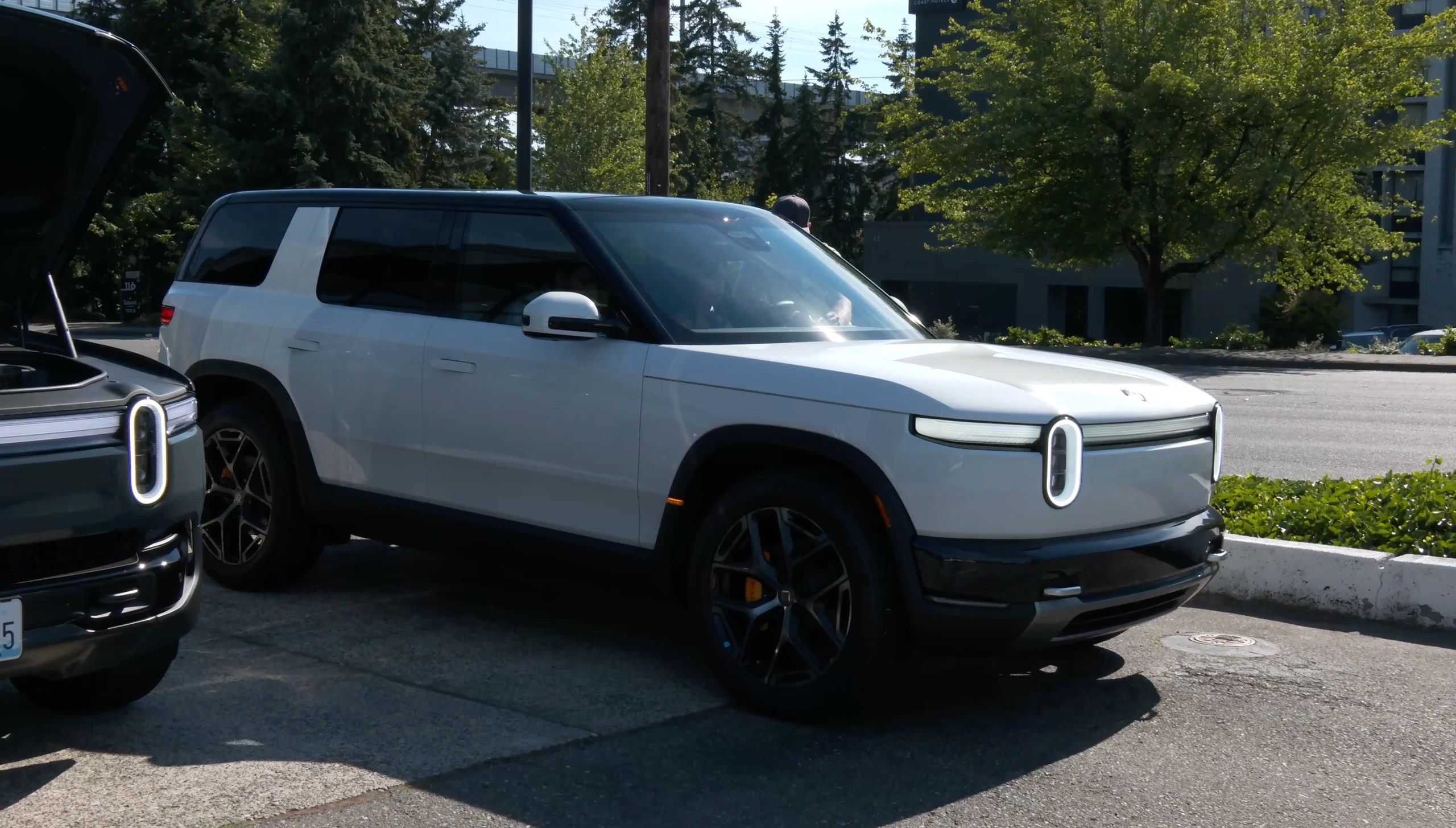
At a test drive in Bellevue, Washington (yes, a test drive just like you would take), it became clear that Rivian isn't trying to reinvent itself with the R2. It's the distilled version of the R1S where it counts—smaller and more affordable. Let me stress, I hope to get an R2 for a better shakedown. But for now, here are quick impressions.
I watched more than one customer briefly confuse the two vehicles parked next to each other. Understandable. The family resemblance is strong. The R2 looks like an R1S left in a hot dryer too long. A compliment, to be sure.
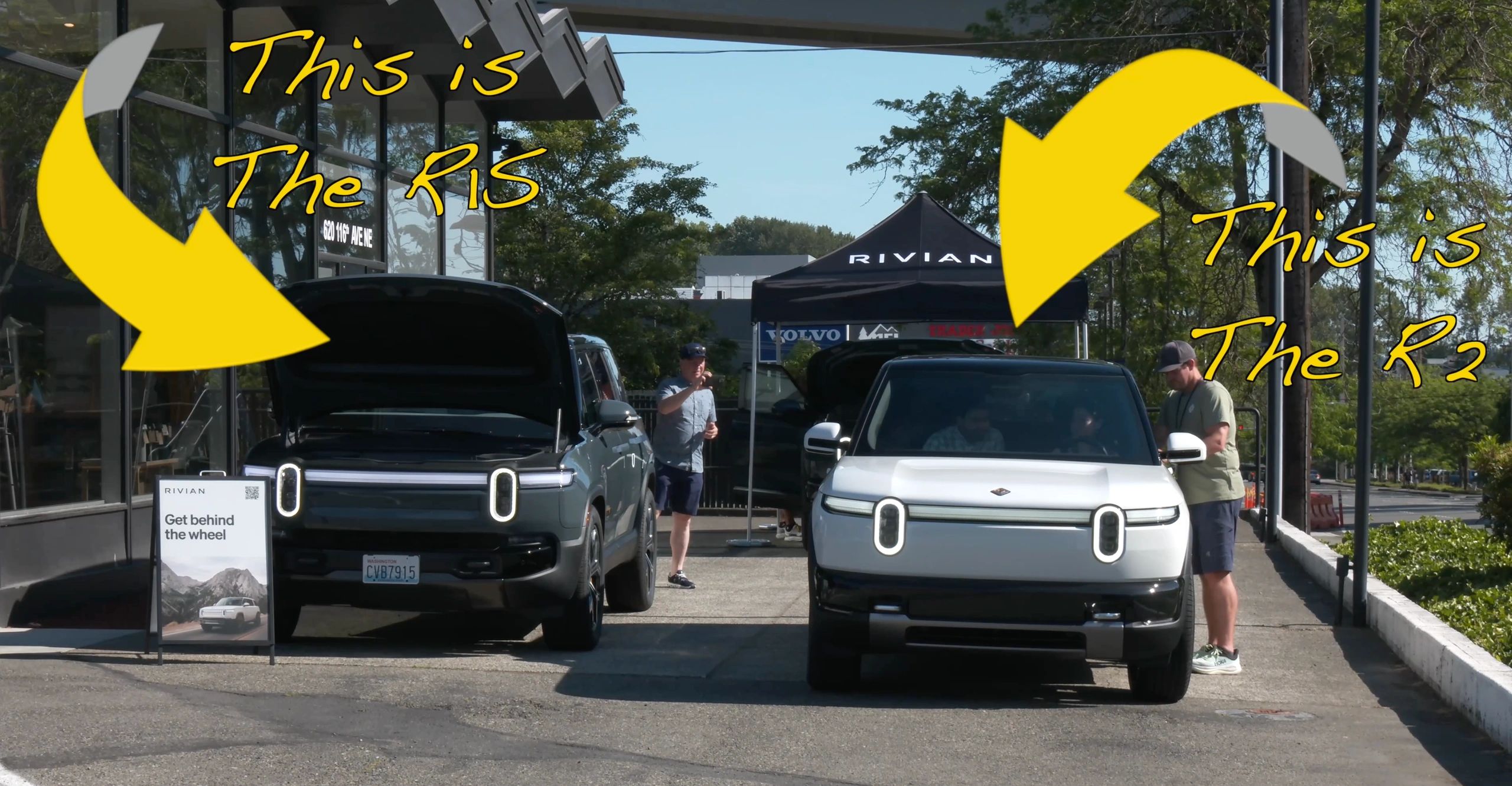
I was allowed 15 minutes of seat time in the R2 Performance that I stretched to 20. Until I get one for a longer shakedown, here are my initial thoughts. Or, watch the video.
As much as I could experience any kind of launch in Bellevue traffic, there's loads of power. The Dual Motor AWD Performance model makes 656 horsepower and 609 lb-ft. of torque. That's enough grunt to make most sports cars defer to this SUV at stoplights. Both the Performance and upcoming AWD Premium models are EPA-rated at 330 miles of range from the 87.9-kWh battery pack. Rivian rates the Performance trim's 0-60 sprint at 3.6 seconds. It's not violent acceleration; it builds progressively, much like Cadillac's Lyriq.
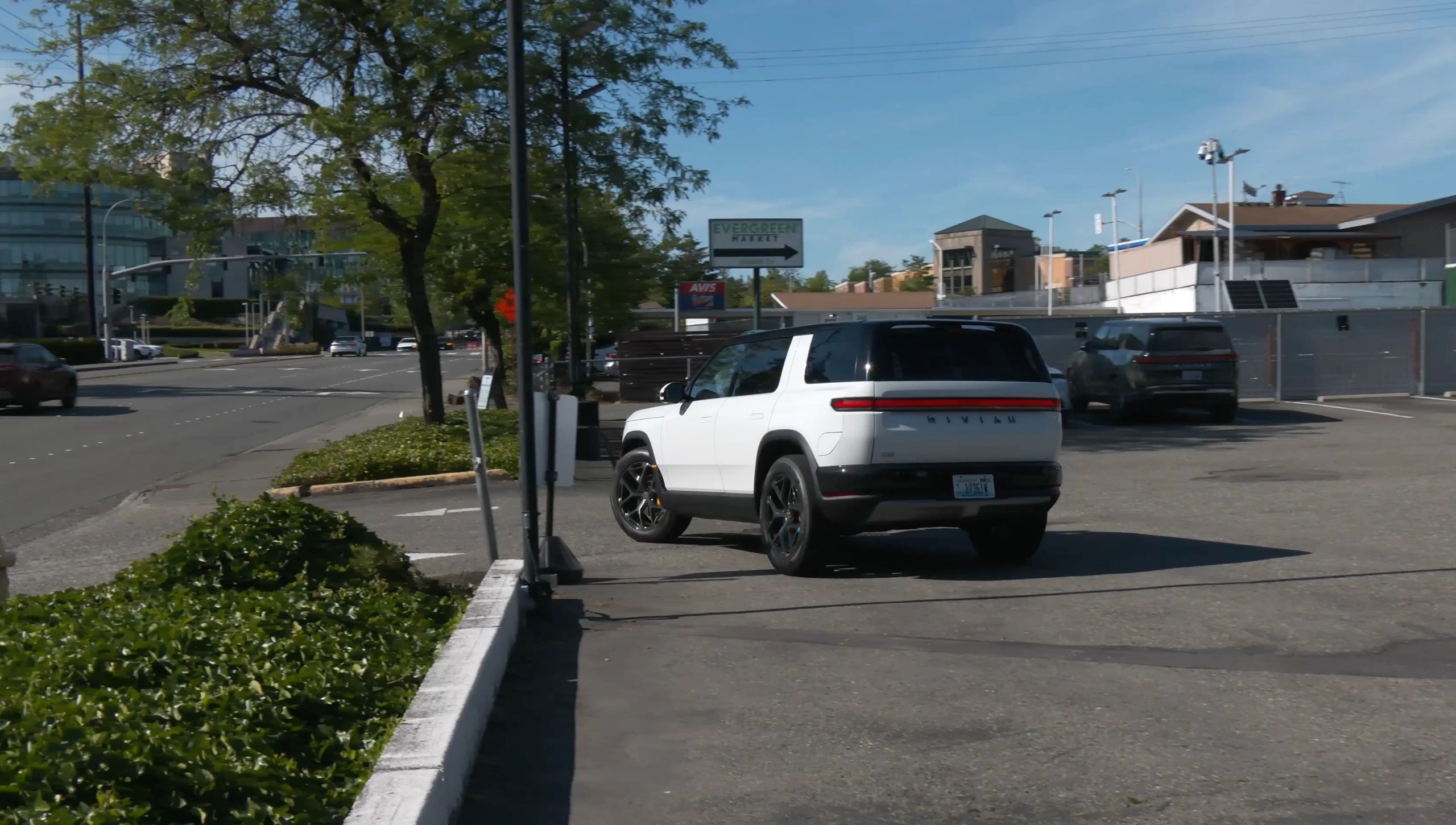
Regenerative braking is adjustable. I find the lowest setting to be more than I prefer (FYI, I don't like one-pedal driving). R2 uses blended braking so the pedal travel begins with recuperation, transitioning to the physical binders. More on that once I get a longer test drive.
There was no time for freeway driving, but the cabin seemed quiet while pushing the 40-mph speed limit as much as I felt comfortable. Visibility is excellent thanks to large windows. With semi-active dampers, the ride quality is comfortable on Bellevue's well-maintained roads. The steering is a little on the light side, with a feel I can only describe as a smidge rubbery. It's a different dynamic from any vehicle I've driven. Again, more time behind the wheel is needed.
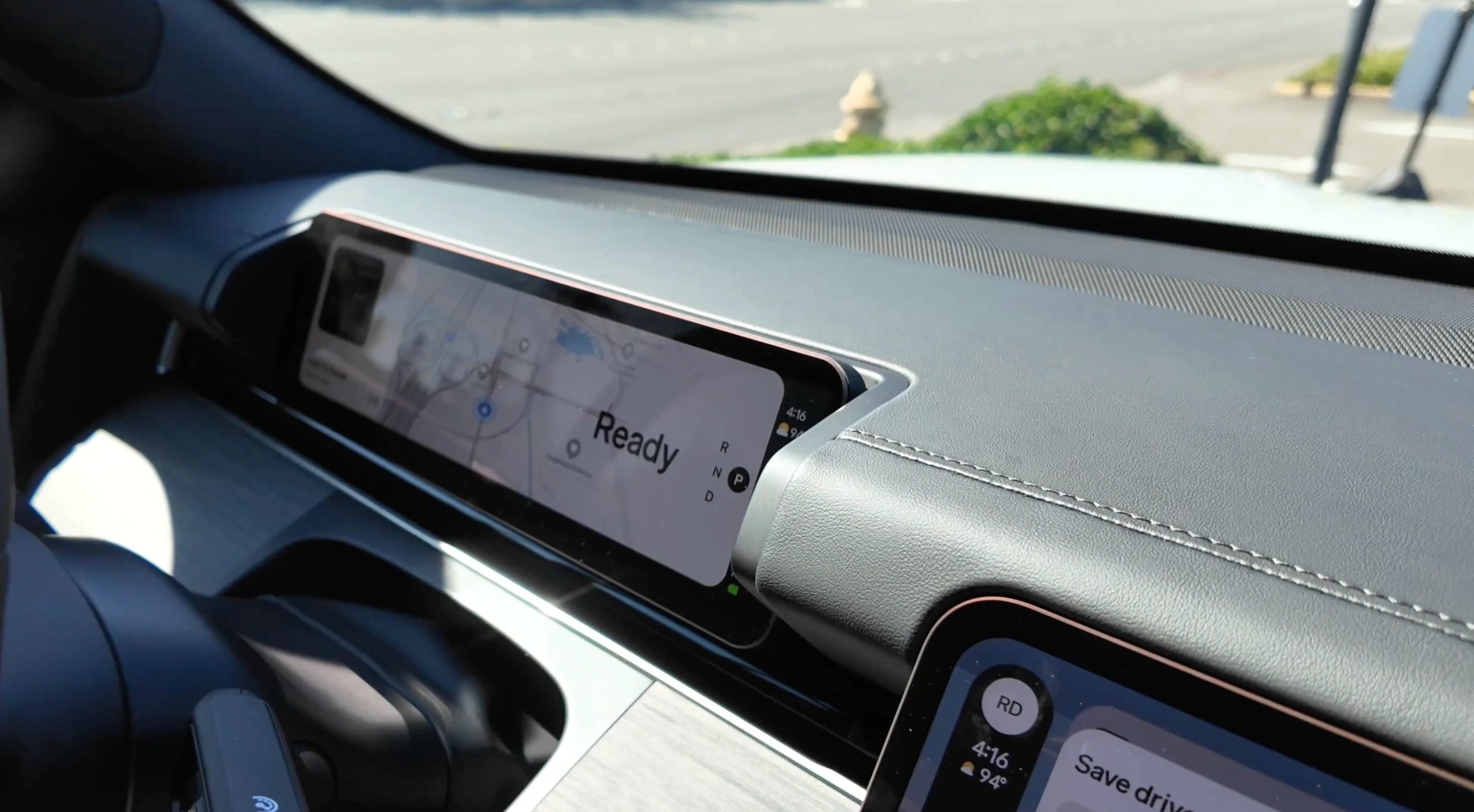
There's a gauge-cluster screen in front of the driver. Thanks, Rivian.
The R2's size advantage becomes apparent in moderate Bellevue traffic. It's not huge. It's not small either. Rivian clearly consulted with Goldilocks. It's just right for hauling five people.
My only real experience with the interface was at a couple of stoplights. Flow and touch response are up there with the best in the business. Apple CarPlay and Android Auto remain MIA. Rivian relies on its own software ecosystem, though owners can still make calls, send texts and access music services such as Spotify.
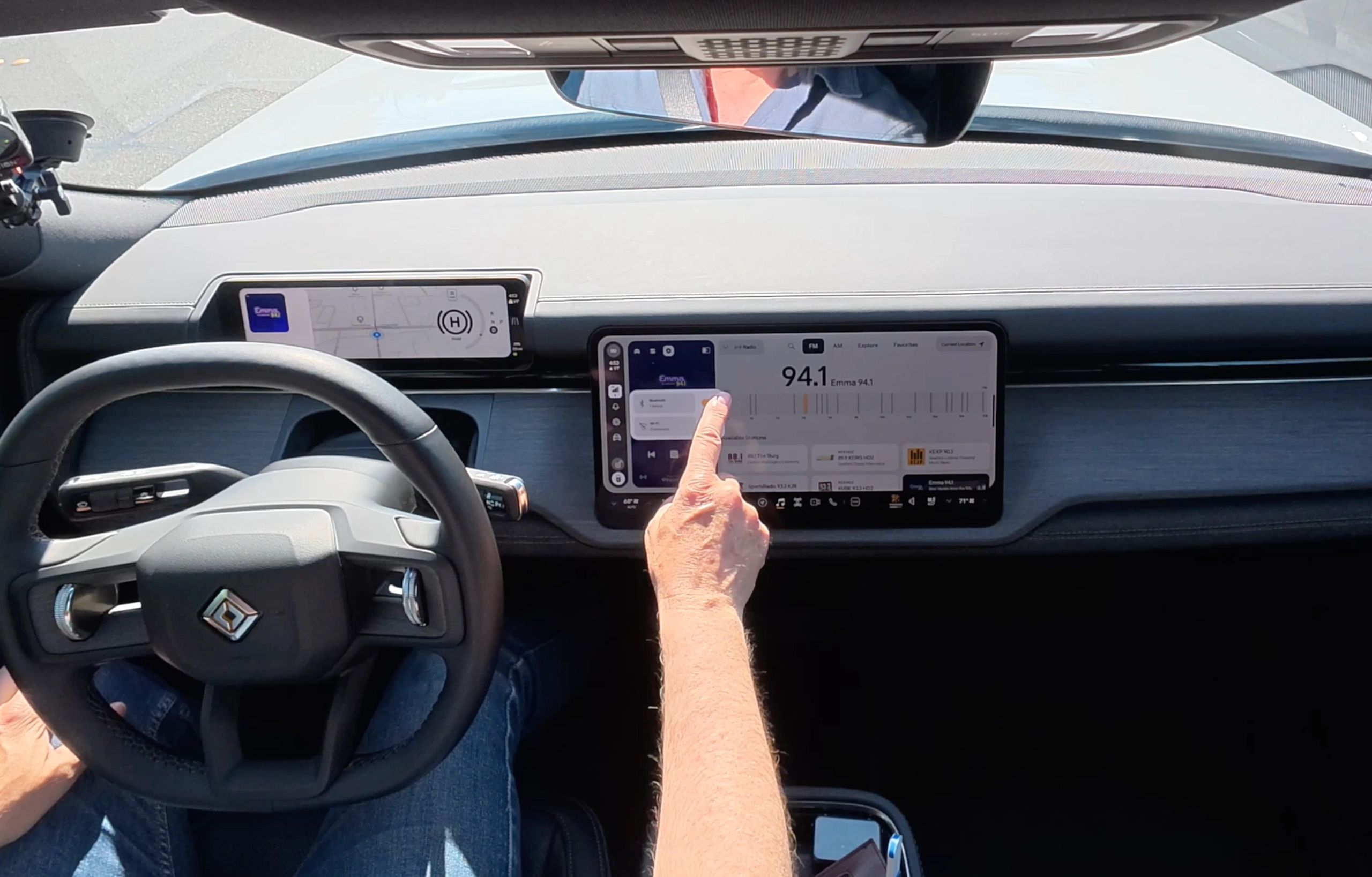
Back at the showroom, the cabin has the same clean, modern aesthetic as the R1S. Natural-looking materials such as real wood, leather and durable cloth give off an authentic vibe. There's an airy feel thanks to a large glass roof, though there's no built-in shade or electrochromic glass. Storage is best in class. The flat floor gets a tray to keep backpacks and purses from sliding around during hard cornering. There's an extra pull-out cubby below the center console, generous door pockets and even twin storage bins on the dashboard, where most vehicles make do with one.
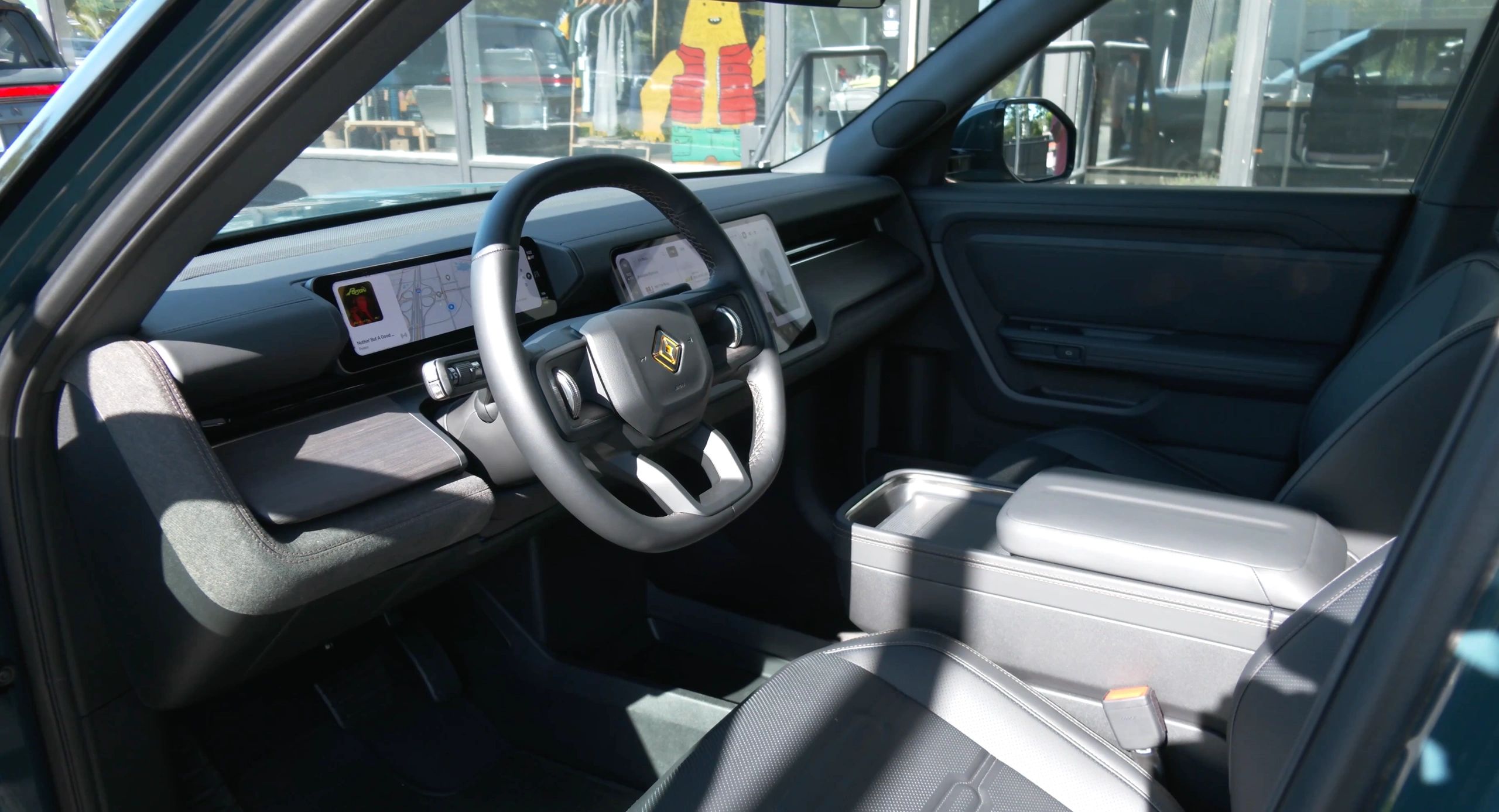
Like many EV startups, Rivian has embraced minimalism. Hard controls are limited, with adjustments for items like mirrors and steering-wheel position handled through the touchscreen and steering-wheel buttons. Fortunately, the drive-control stalks are refreshingly straightforward.
The back seat should comfortably accommodate three average-size adults, and the carpool crowd gets heated rear seats, at least in the Performance trim. The floor is completely flat, enhancing both comfort and flexibility. There's no dedicated rear climate zone.
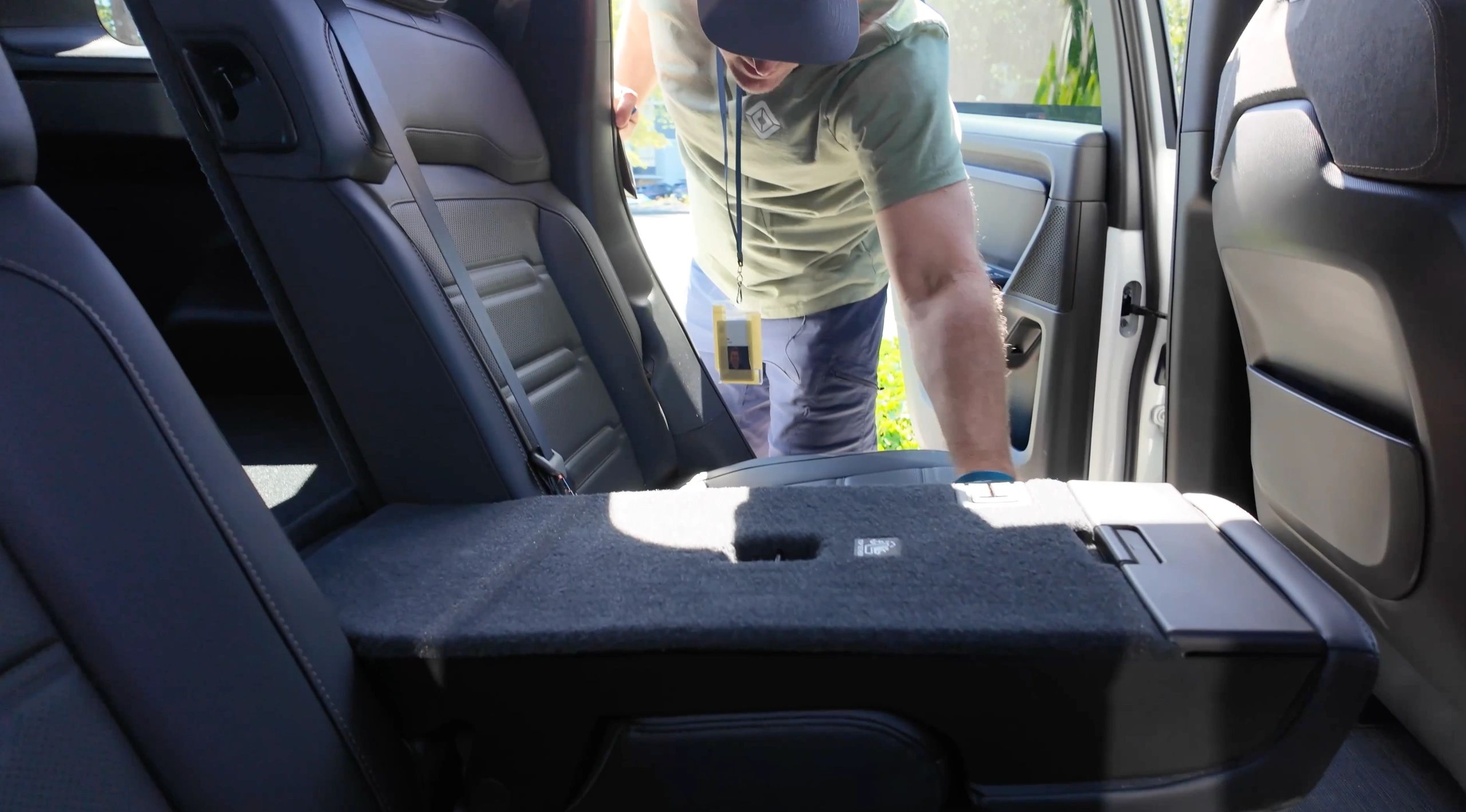
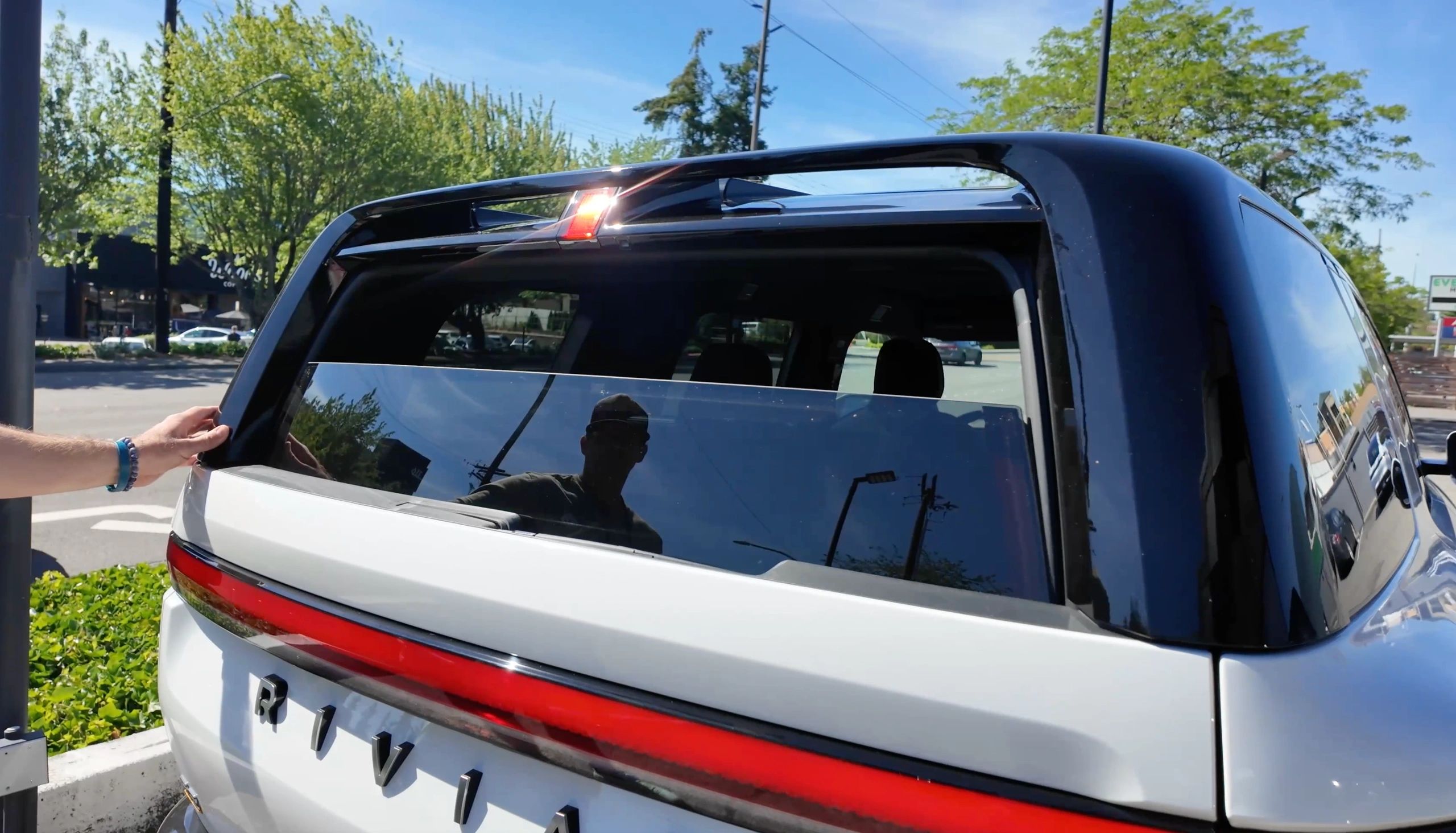
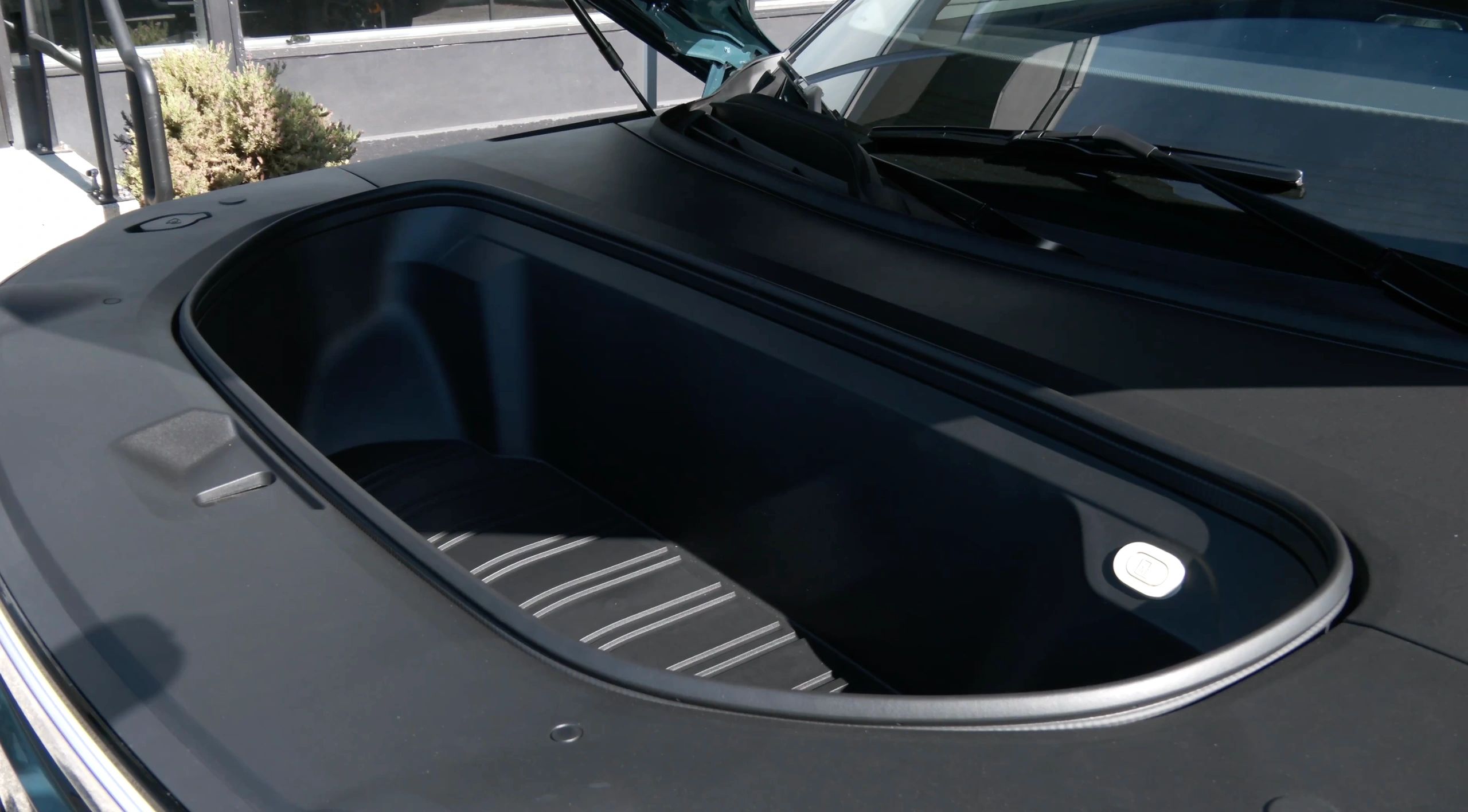
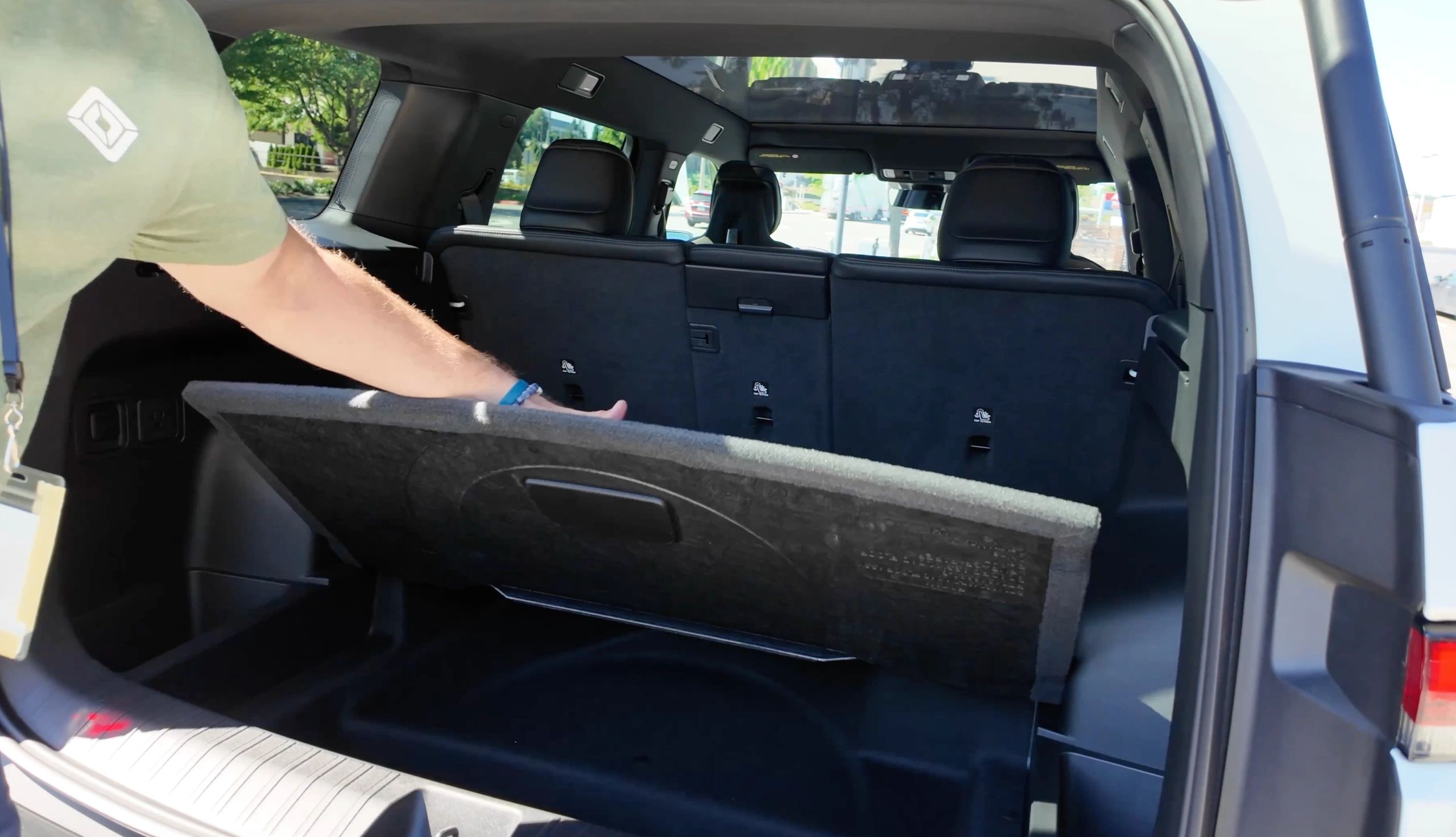
Cargo space is impressive for a vehicle this size. Behind the rear seats, the R2 offers 29 cubic feet of storage. Fold them down and there's nearly 80 cubic feet. Also, a 40/20/40 split perfect for skiers. Add to that the rear window rolls down to help haul long stuff like surfboards. Plus, there's another five cubic feet in the front trunk. The little Rivian has big utility.
Charging is handled through a NACS port, giving owners access to Tesla's Supercharger network. Rivian says DC fast charging can replenish the battery from 10 to 80 percent in about 29 minutes. It's best to charge at home, where it's more convenient and far less expensive.
Adventure remains part of the mission. The R2 Performance offers 9.6 inches of ground clearance, a 25-degree approach angle and a 26-degree departure angle. Functional tow hooks come standard and buyers opting for the Launch Package get the 4,400-pound towing package. There are model-specific drive modes for various terrain conditions.
That Launch Package bundles Rivian's distinctive green paint, towing equipment and a lifetime subscription to the company's semi-autonomous driving system. Future buyers will pay either $49.99 per month or a one-time fee of $2,500 for the technology. I spent no time testing that tech. Sorry.
As for pricing, the Performance model starts in the high-$50,000 range, though common options and premium paint can push the sticker to roughly $62,000. A less expensive AWD Premium model arrives later in 2026, starting in the mid-$50,000 range. The most affordable version, a rear-wheel-drive Standard model, is expected in summer 2027 with pricing beginning around $45,000.
Based on this first drive, Rivian has successfully captured much of the charm, utility and adventure-ready personality of the R1 while delivering it in a package that's easier to park and easier on the wallet. For many buyers, the R2 won't feel like the smaller Rivian. It will feel like the right-sized one.