
FORD · MANUFACTURER NEWS · NOVEMBER 10, 2026
Ford Says Early Mustang Mach-E Batteries Average 92 Percent Health
Will an electric vehicle’s battery hold up over time? Ford has some encouraging numbers from its earliest Mustang Mach-E owners—and considerably more evidence than one neighbor’s opinion.
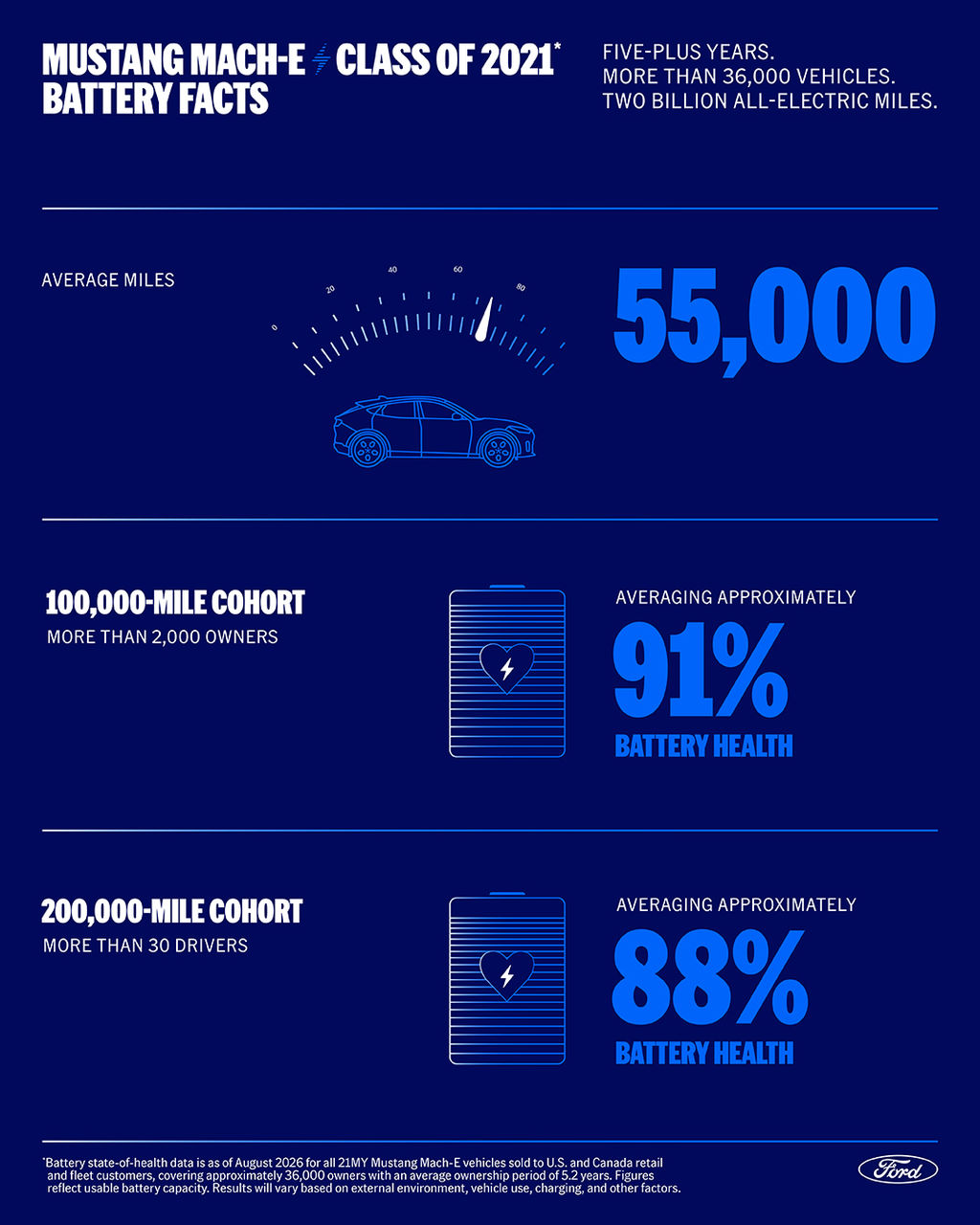
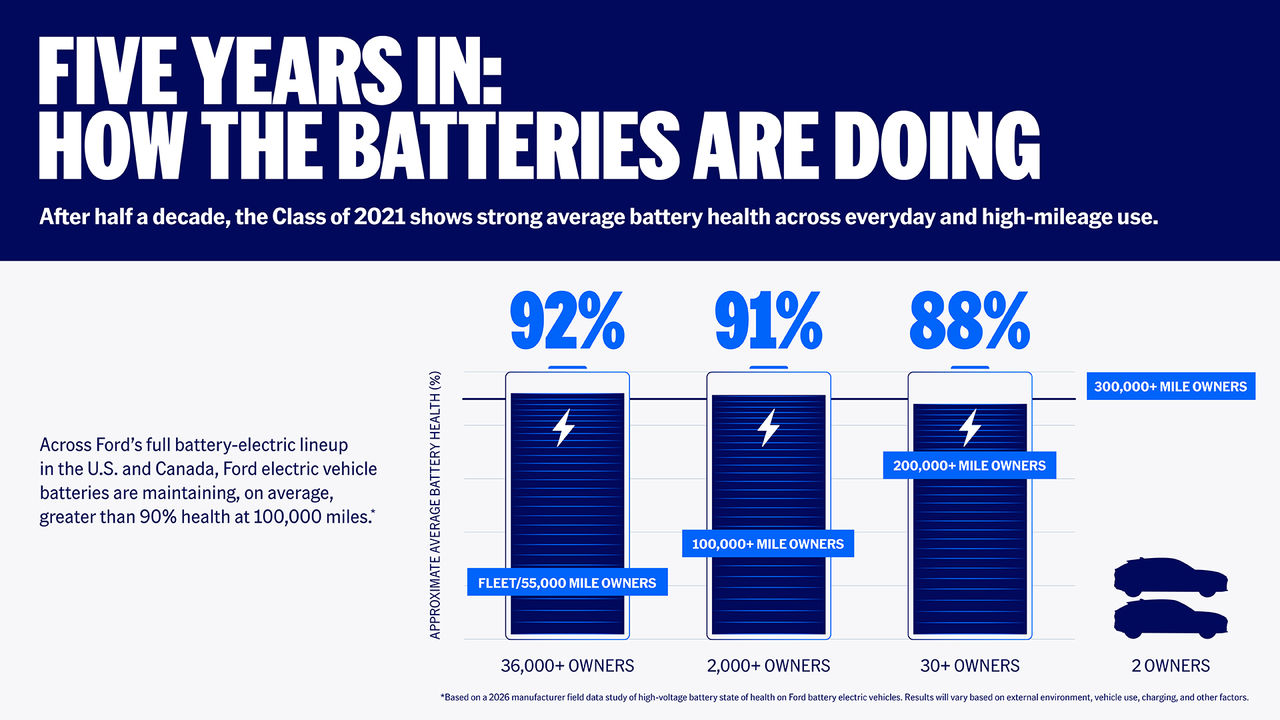
The company analyzed more than 36,000 model-year 2021 Mach-Es driven a combined two billion miles across the United States and Canada. At roughly five years, average battery health stands at 92 percent. Ford says 95 percent of those vehicles fall between 87 and 97 percent.

Higher-mileage examples offer another useful checkpoint. More than 2,000 owners have passed 100,000 miles on their original battery, averaging better than 91 percent health. A smaller group of more than 30 vehicles beyond 200,000 miles averages 88 percent.
Then there’s David Blenkle, whose 2022 Mach-E has covered more than 400,000 miles on its original battery. Impressive, though most of us have other things to do.
These are Ford’s findings, rather than an independent study. Battery health describes remaining capacity relative to its original condition; it doesn’t guarantee an identical percentage of advertised range. Temperature, speed and other conditions still influence how far a charge takes you.
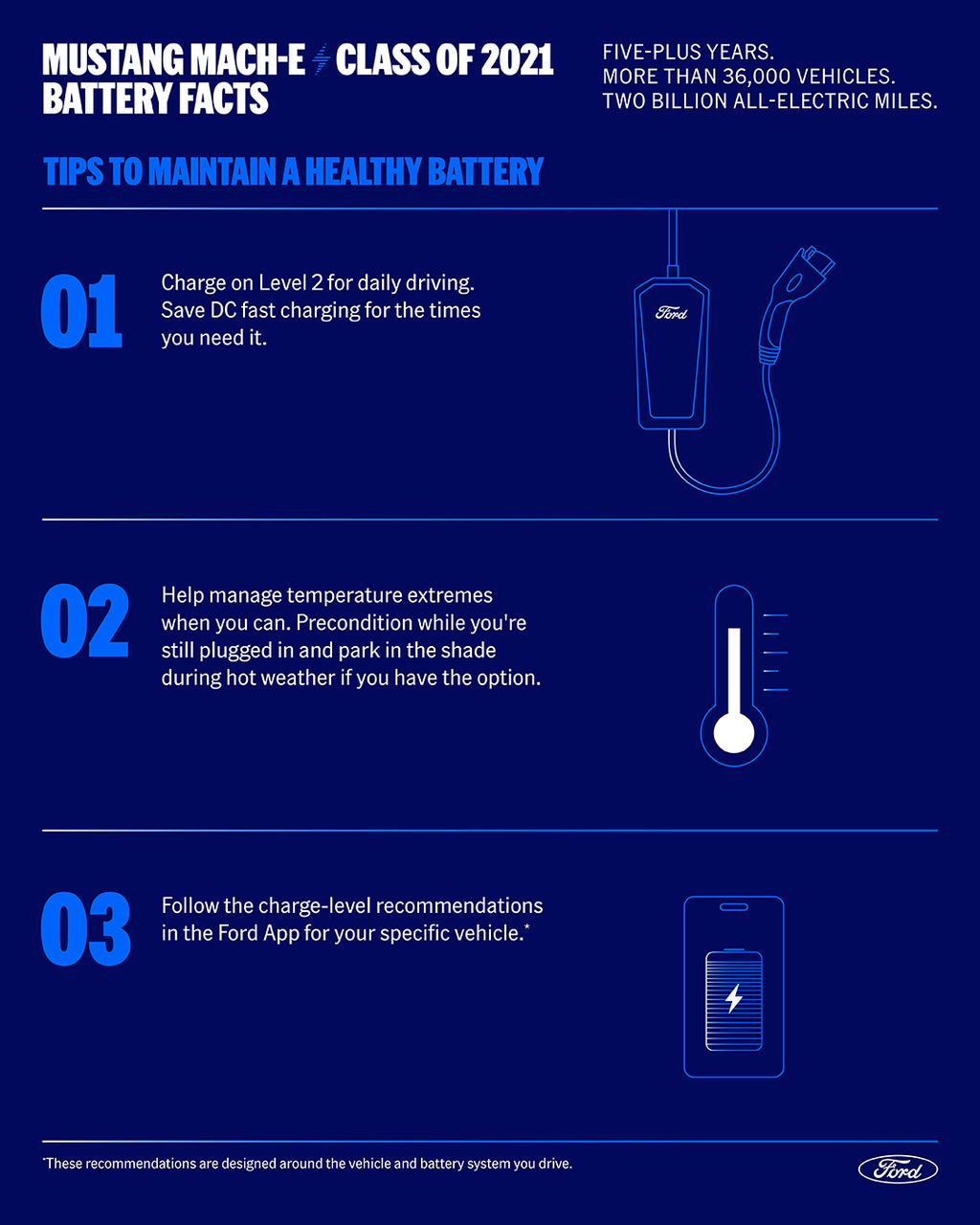
Ford recommends Level 2 charging for everyday use, reserving DC fast charging for when it’s needed, and preconditioning while plugged in during temperature extremes. Owners should follow their vehicle’s charging guidance: the 2021 vehicles studied use nickel-based NCM batteries, while some newer Ford EVs use LFP chemistry with different charging recommendations.
The takeaway: this sizable early fleet suggests battery aging can be gradual, even as the odometer gets a workout.
Read Ford’s full report. Photos and graphics: Ford.