
DRIVEN REVIEW · ELECTRIC VEHICLES
2027 Lexus ES 350e Review: The LS Is Gone. Long Live the ES.
The Lexus ES has been around since the brand arrived in America in 1989. The more affordable sister to the flagship LS400, it helped establish the company's reputation for refinement, reliability, and a near-obsessive attention to quietness and smoothness. Remember the epic ad with 15 champagne glasses on the hood? Brilliant.
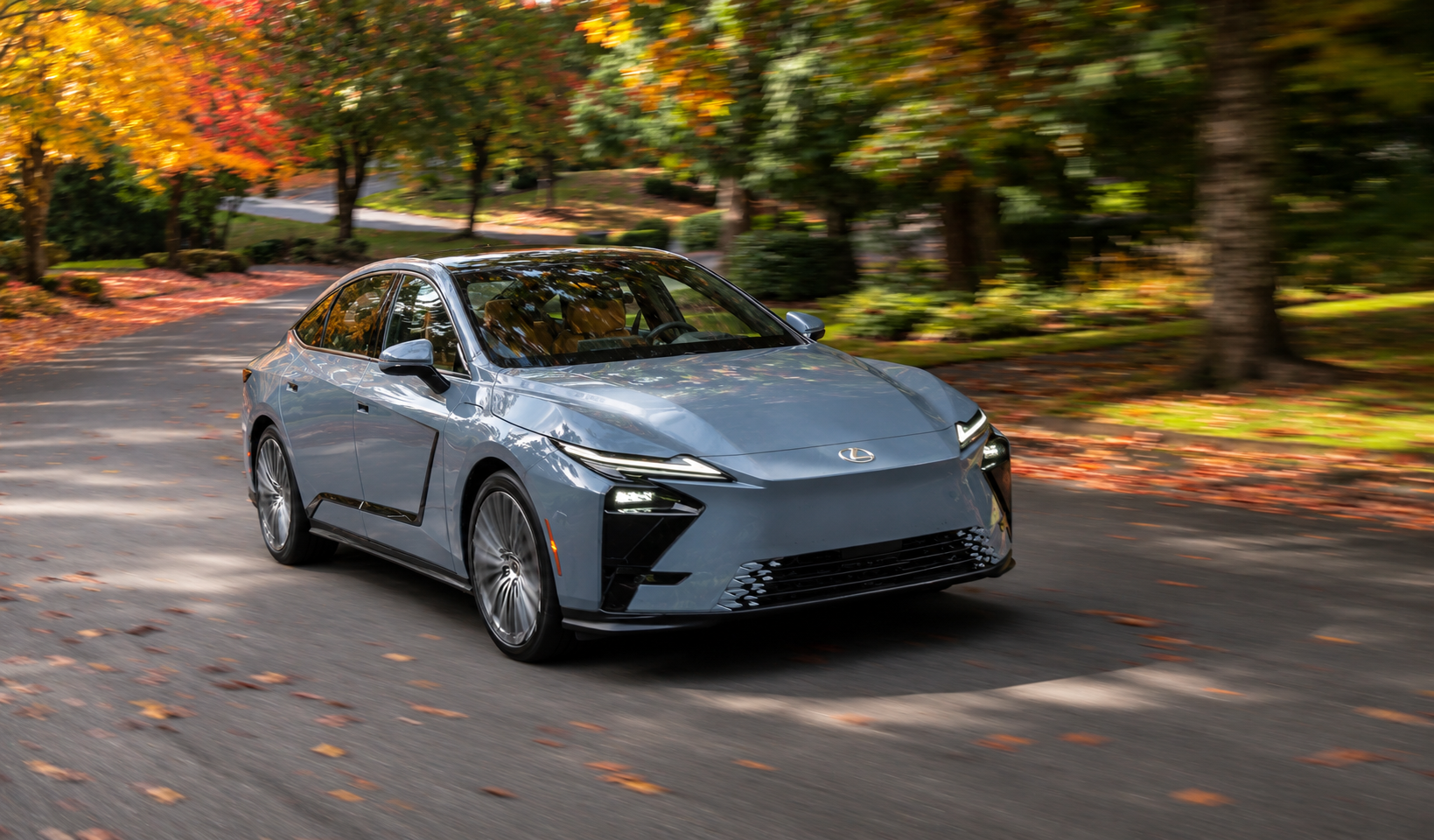
Photo: Driven
Now the LS is gone, and the eighth-generation ES is a bigger deal. Literally.
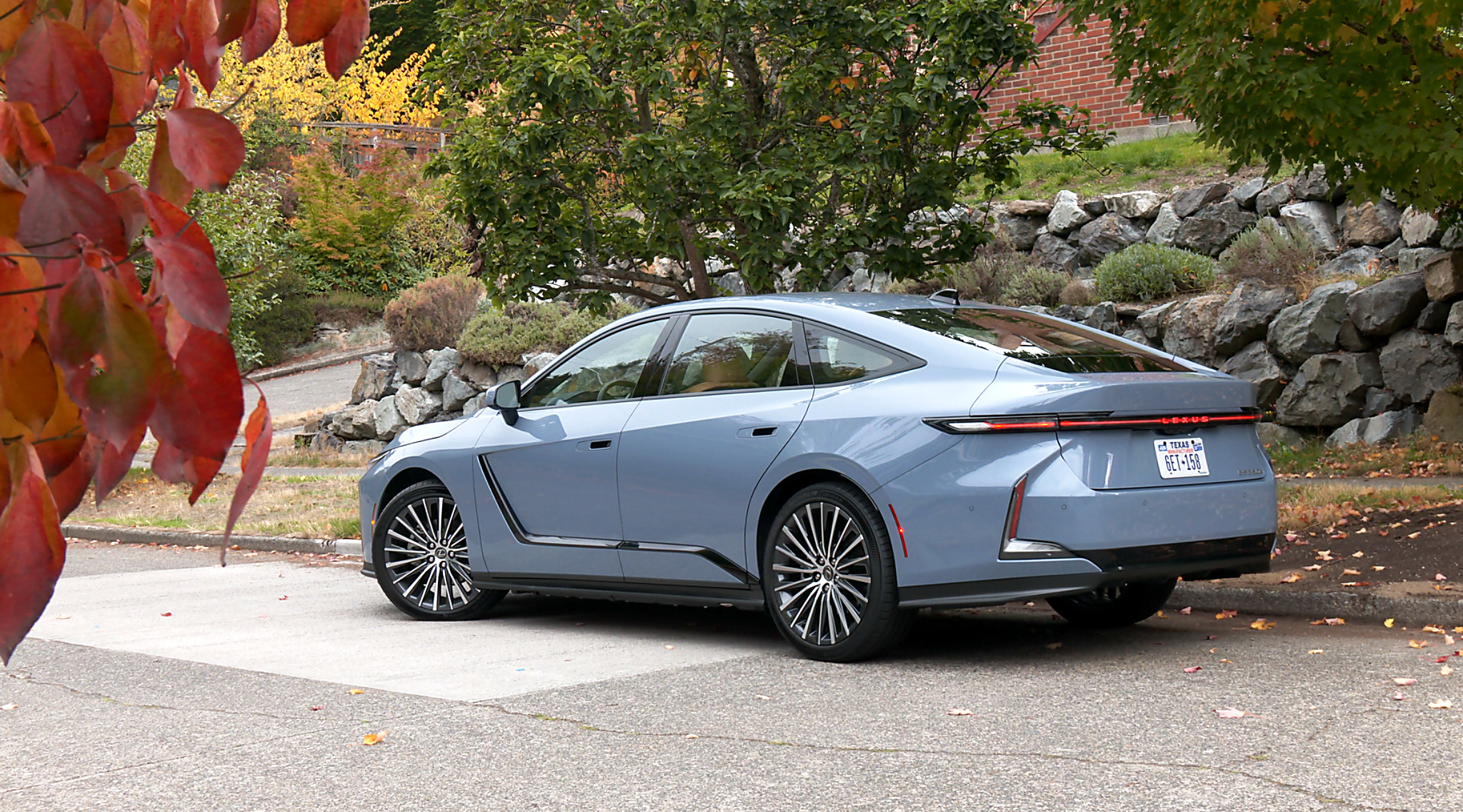
The redesigned ES is six and a half inches longer, two inches wider, and four and a half inches taller than its predecessor. Its slightly chubby silhouette isn't unlike the Toyota Crown sedan. The wheelbase grows another three inches. The result is a sedan that's taller and wider than the outgoing LS. Apparently, the ES has been eating its Wheaties.
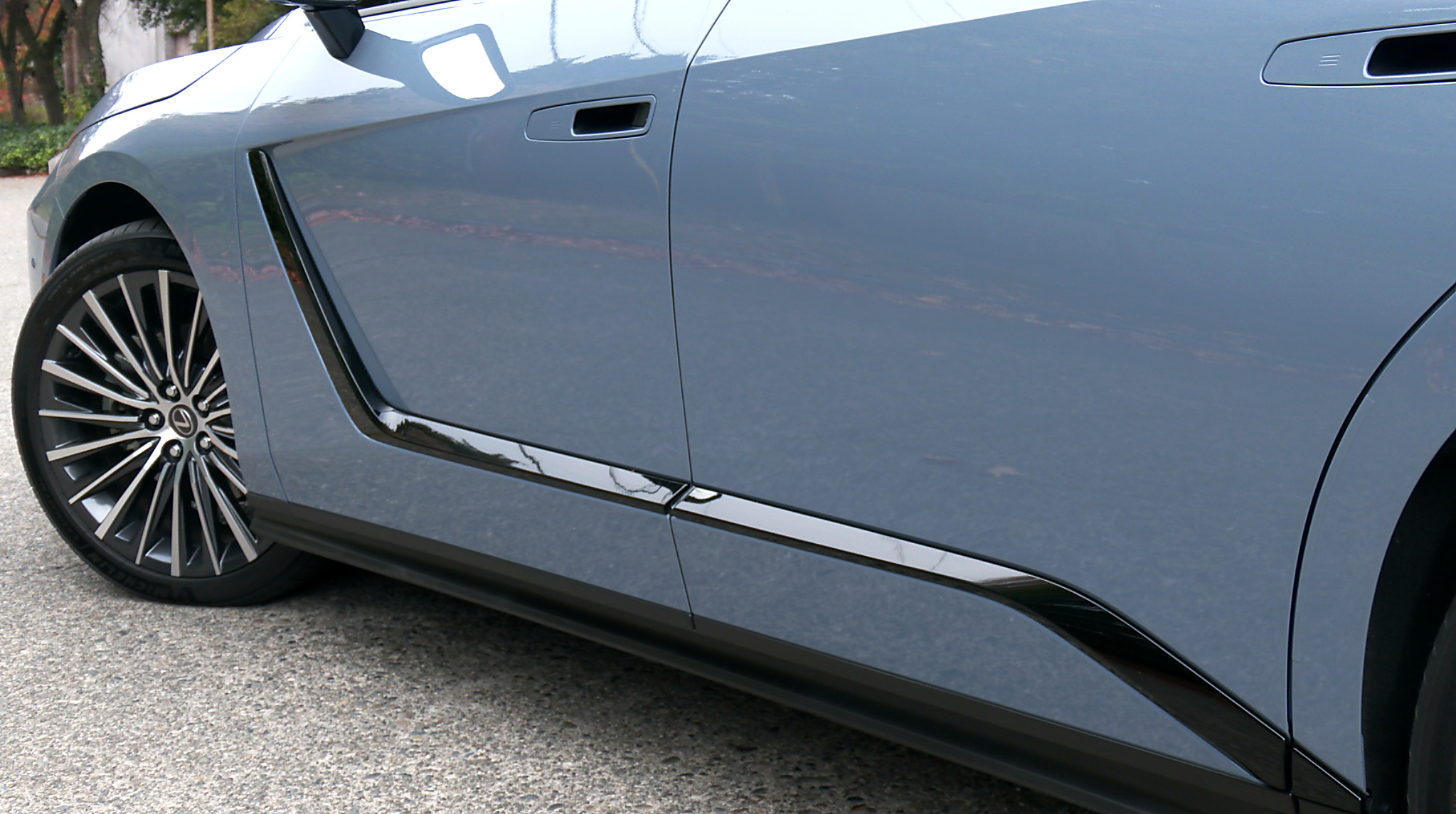
The design is a significant departure, too. Wayne Gretzky will appreciate the hockey stick slash across the doors, while the familiar spindle grille has been considerably toned down. More Starship Enterprise. Less Darth Vader. The new look is anything but anonymous. Whether it ages gracefully remains to be seen. Bold styling has a way of becoming tomorrow's questionable fashion decision.
Electric Power Suits the Lexus Vibe
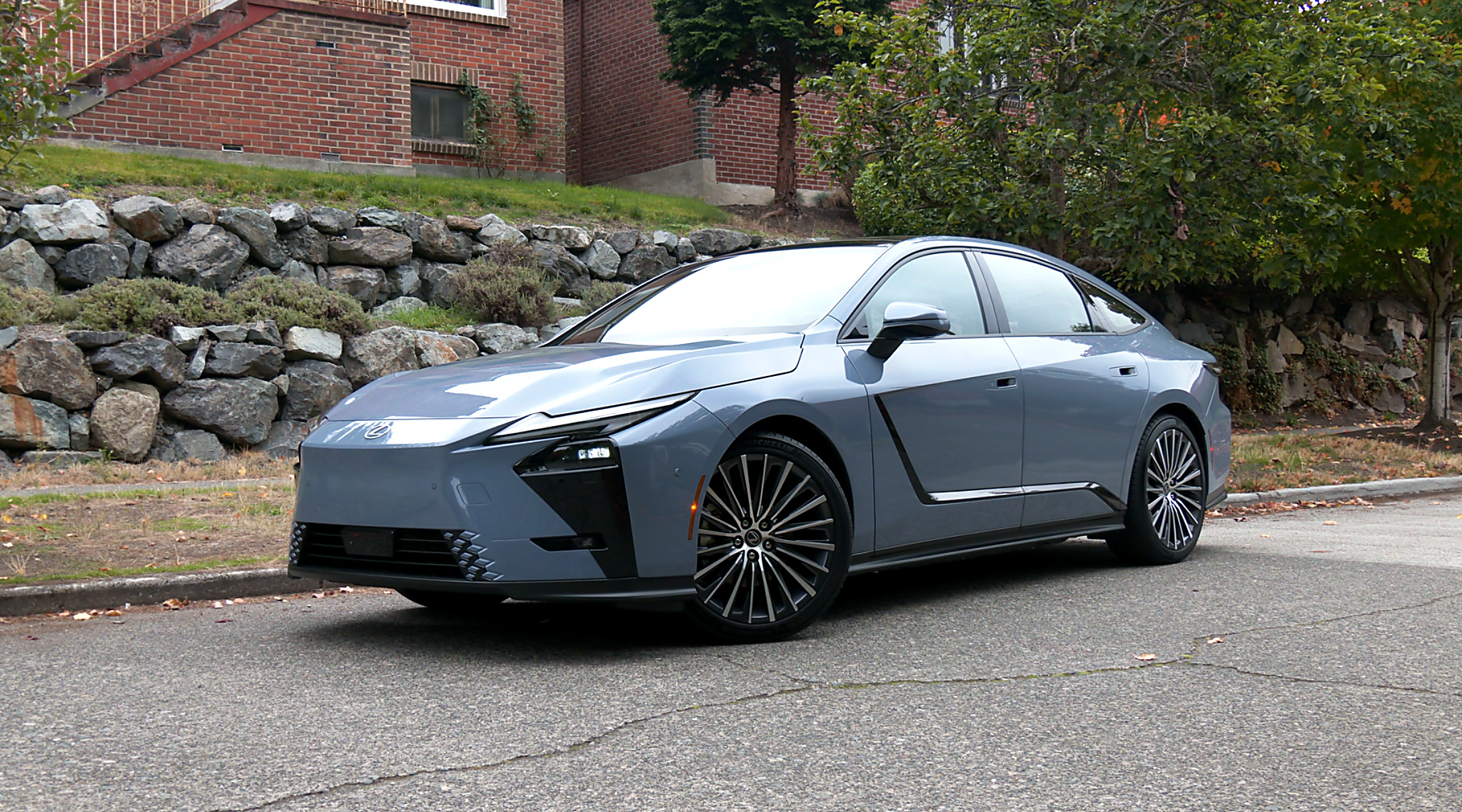
The front-wheel-drive ES 350e starts at approximately $51,000 including destination. The fully equipped Luxury model tested here approaches $64,000. That's a healthy sum, though it’s easily paired down by eliminating the $3,600 Executive Seating Package. More on that in a sec.
350e’s power comes from a single electric motor producing 221 horsepower and 198 pound-feet of torque. A 74.7-kWh lithium-ion battery provides up to 307 miles of EPA-rated range with smaller wheels. The Luxury's handsome 21-inch wheels reduce that figure to 292 miles.
Lexus estimates a 7.4-second run to 60 mph, leisurely by modern EV standards. Many electric cars accelerate like they've been launched off an aircraft carrier. The 350e has no interest in that nonsense. Acceleration is smooth and linear rather than explosive, laser-focused on traditional Lexus owners. It's not unlike Cadillac's approach to luxury. Highway passing could use more authority, though.
Fortunately, the dual-motor ES 500e offers 338 horsepower, all-wheel drive, and a much quicker 5.1-second sprint. With a starting price only about $1,400 higher, it's tempting. The trade-off is roughly 30 miles of range. Horsepower isn't free, even when electrons are doing the work.
I've driven both the 350e and 500e, plus the hybrid 350h, during NACTOY judging in Ann Arbor, Michigan. I'd argue the EV powertrains are more compelling for Lexus owners, provided they can charge at home. Their seamless propulsion is even silkier than the hybrid's already excellent powertrain. Electric motors are tailor-made for this brand.
Fight me. I'm right. Time to revive the champagne ad again and place four dozen glasses on the hood.
Comfort Comes First
The ES 350e's greatest strength is its ride quality.
Even with 21-inch wheels and low-profile tires, the suspension absorbs pavement imperfections without transmitting harshness into the cabin. It's impressively quiet, smooth, and controlled—triple-Teflon-coated luxury.
Seattle's pavement provides plenty of opportunities to test suspension engineers' work. The ES treats most imperfections as confidential information. Passengers simply don't need to know.
This isn't the floaty Lexus of decades past, when some models cornered with the enthusiasm of a waterbed. Body roll is well managed, and steering is accurate, though feedback remains limited. The ES doesn't pretend to be a sports sedan. It knows what it is. Refreshing.
Audi, BMW, and Mercedes-Benz offer electric alternatives that may better satisfy driving enthusiasts. The Lexus prioritizes the people inside rather than the driver's Nürburgring fantasies. Exactly what longtime customers expect.
Steering-wheel paddles adjust regenerative braking. Maximum regeneration provides substantial deceleration, but the ES won't come to a complete stop without the brake pedal. So true one-pedal driving is not a thing here. Apparently, Lexus believes drivers should be involved. Know that the transition between regenerative and friction braking is seamless.
A Cabin With Some Surprises
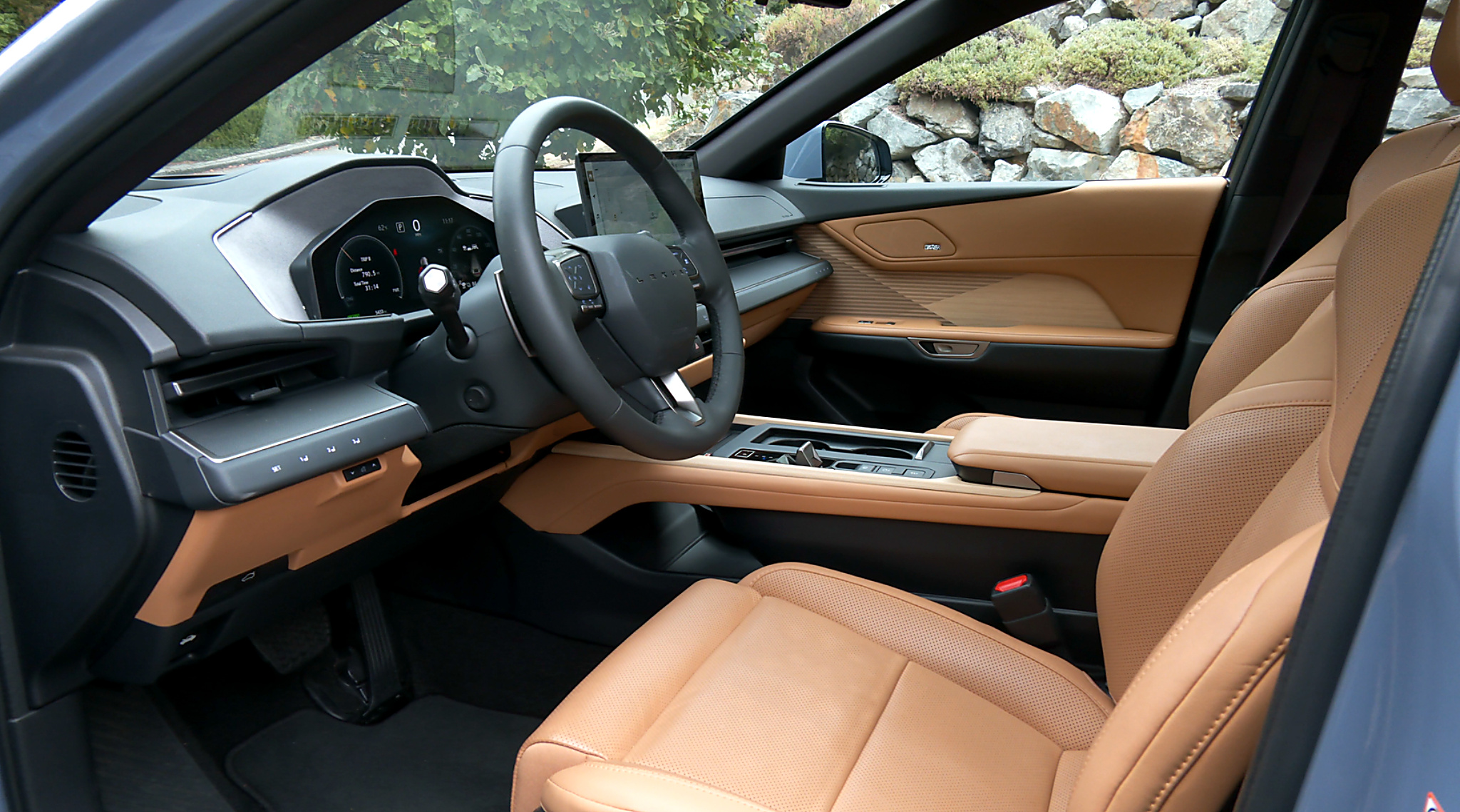
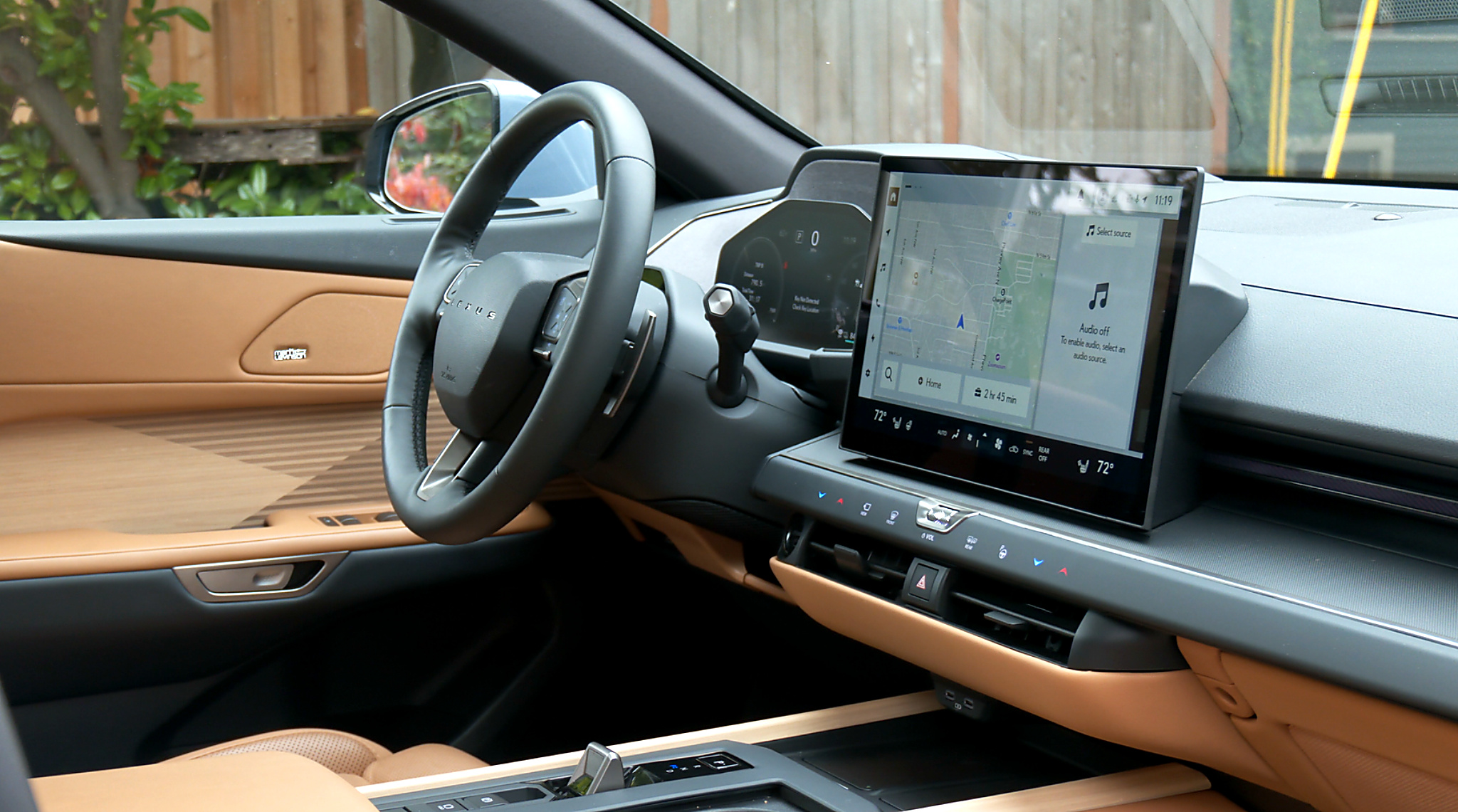
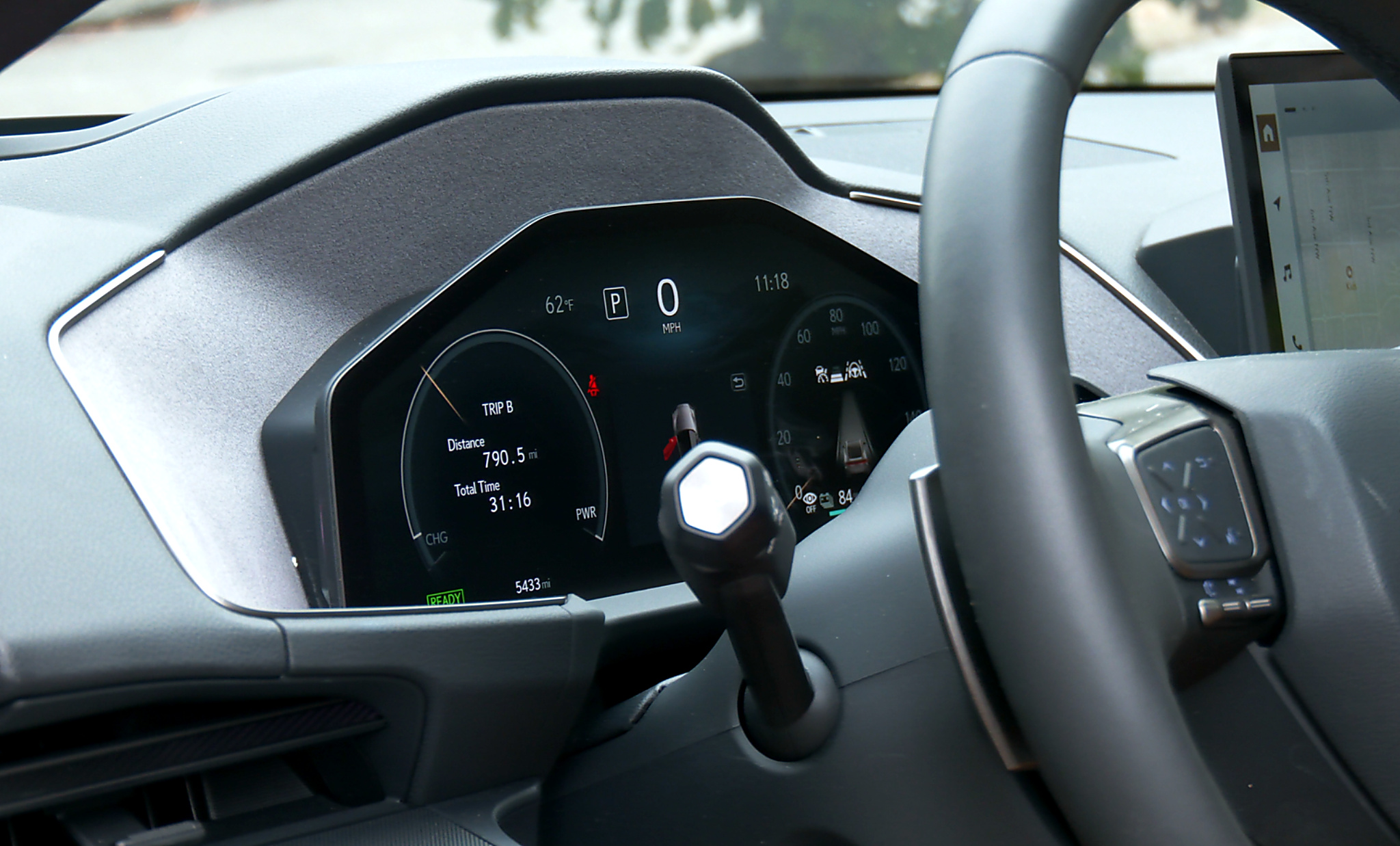
Inside, the ES adopts a clean, contemporary design with a substantially improved interface. Lexus has made significant progress from the days when operating its infotainment system felt like trying to sign your name during an earthquake.
The Luxury trim's bamboo accents resemble fine Asian furniture, while ambient lighting panels can display animated patterns reminiscent of the Northern Lights. On acid. Some passengers will find the effect captivating. Others may prefer a steady color and a little less psychedelic entertainment.
Heated and ventilated semi-aniline leather front seats are supportive and adjustable. Radiant heating panels warm occupants' legs, a thoughtful touch on cold mornings. Engineers managed to save the glove box too.
The cabin isn't as lavish as the departed LS. Some plastic surfaces, particularly across the passenger-side dashboard, look ordinary for a luxury vehicle. At nearly $64,000, a few materials should be trying harder. There are thoughtful touches, though. Soft-close doors, a surround-view camera system, and integrated dashcam functionality reinforce the premium experience.
The available Mark Levinson surround-sound system is another welcome addition. In a cabin this quiet, good audio doesn't have to compete with tire roar, wind noise, or the engine's opinion of your driving.
The Back Seat Is the Star
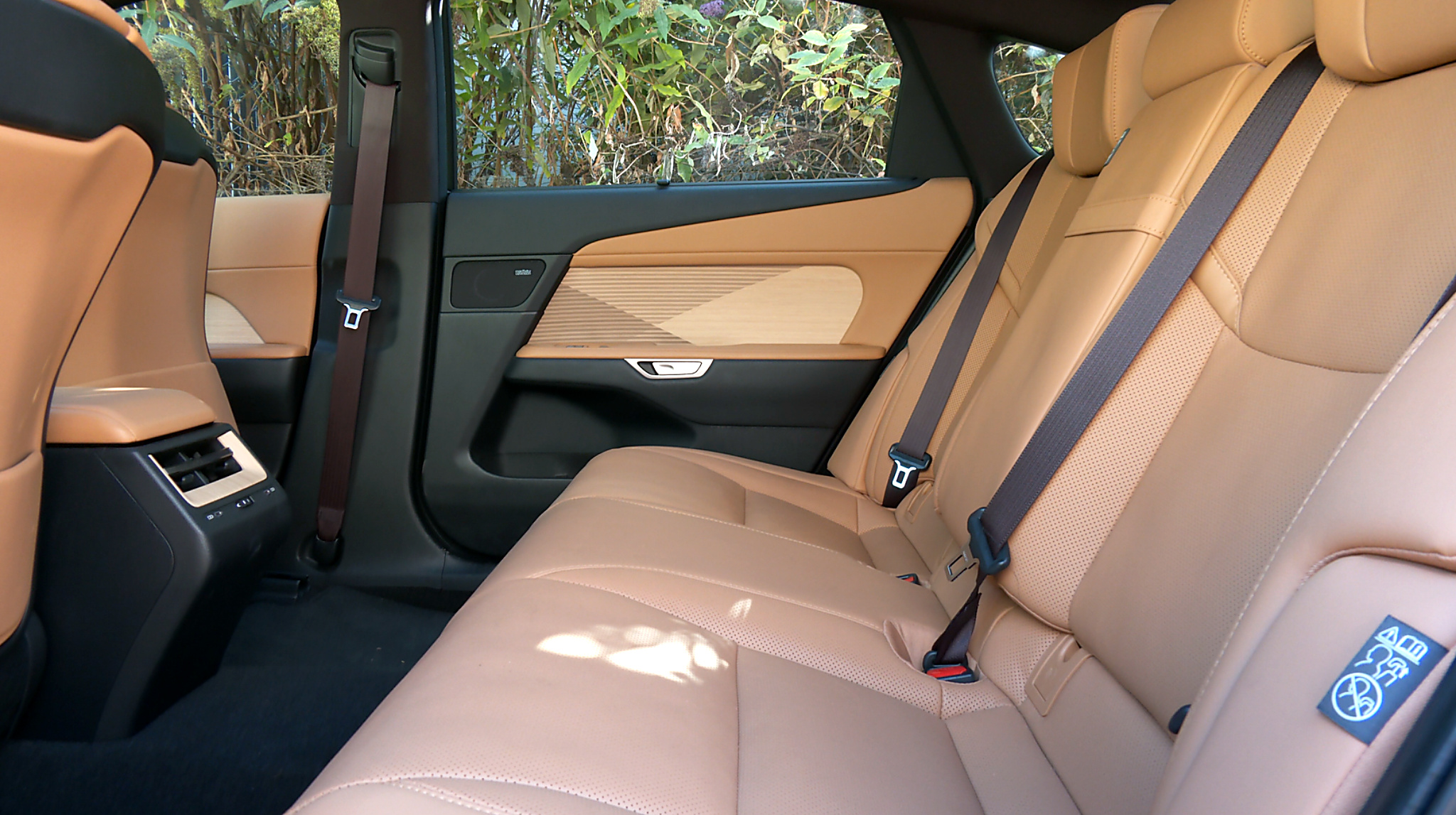
The ES's increased dimensions pay dividends in rear-seat accommodations.
There's abundant headroom, legroom, knee room, and foot space. Three average-sized adults can travel comfortably, while two occupants have room to stretch out. This is where the ES begins making a convincing argument that the LS might not be missed quite as much as expected.
Back to the $3,600 Executive Seating Package in the back. While it lacks a concierge handing out warm towels, it offers LS feels with power-reclining seatbacks, heating, ventilation, massage, an extendable ottoman on the passenger side, and a multifunction center armrest that controls the rear sunshade. It's an impressive setup for anyone who regularly rides rather than drives. But it eliminates the split folding seatbacks and seriously eats into cargo utility. Hey, Lexus folks are pragmatic.
Moving to the trunk, it holds just over 13 cubic feet. Its usable shape earns a respectable seven-pack score in the Driven TP Trunk Test. There's no spare tire or front trunk. The ES is generous with passenger space, not so bad with hauling groceries either.
Charging and Range
The ES 350e gets a native NACS charging port, providing access to compatible Tesla Superchargers. Lexus also supplies charging adapters for other networks. The ES approaches charging stops with the same relaxed attitude it brings to acceleration. The maximum DC fast-charging rate is 150 kW. No need to rush. Perhaps enjoy a coffee. Lexus quotes 28 minutes to charge from 10 to 80 percent under suitable conditions. Adequate, but rivals from Audi, BMW, and Genesis can charge considerably faster.
During testing around Seattle, with temperatures in the low-to-mid 60s, the indicated range tracked reasonably close to the 292-mile EPA rating despite enthusiastic driving. That's encouraging, especially since EPA estimates and real-world results don't always maintain a close relationship.
Lexus also estimates substantially lower annual energy costs for the electric ES than for its hybrid counterpart. And, an interesting twist: the EV starts roughly $2,000 below the ES 350h. For owners that can charge where they sleep, the electric ES makes a particularly compelling financial argument.
Lower purchase price, lower estimated energy costs, and an even smoother driving experience. Sometimes the math actually works in the buyer's favor. Enjoy that rare automotive moment.
The Verdict
The 2027 Lexus ES 350e isn't the quickest electric sedan, or fastest at a charging station. Some cabin materials could be richer, and the dramatic exterior styling won't appeal to everyone. Its acceleration won't rearrange your internal organs, either.
But it nails the Lexus fundamentals. It's exceptionally quiet, comfortable, and spacious. The driving experience is refined, the technology is improved, and the rear accommodations rival those of considerably more expensive luxury sedans.
The ES 500e is worth considering for its stronger performance, especially given the modest price difference. Still, the 350e offers a compelling blend of efficiency, refinement, and value.
Lexus may have retired the LS, but its commitment to passenger comfort clearly hasn't disappeared. The ES has grown into a legitimate luxury flagship contender, even if it hasn't inherited the old car's nameplate.
And perhaps the most convincing part of the new ES is that electric propulsion makes it feel even more like a Lexus. After nearly four decades of engineering cars to make engines as unobtrusive as possible, Lexus has finally found a way to eliminate the problem altogether.