
DRIVEN · MERCEDES-BENZ
Mercedes-Benz Takes on Tesla FSD. And It’s Surprisingly Good.
Mercedes-Benz has a serious challenger to Tesla’s Full Self-Driving (Supervised). After experiencing it on the streets of San Francisco, I suspect the Tesla faithful might want to pay attention.
Tesla has enjoyed a substantial head start in advanced point-to-point driving assistance. Its Full Self-Driving (Supervised) system is genuinely impressive, even if the name suggests considerably more autonomy than it actually delivers. Now Mercedes-Benz is entering the conversation with MB.DRIVE ASSIST PRO. And judging from my experience, the Germans have done their homework.
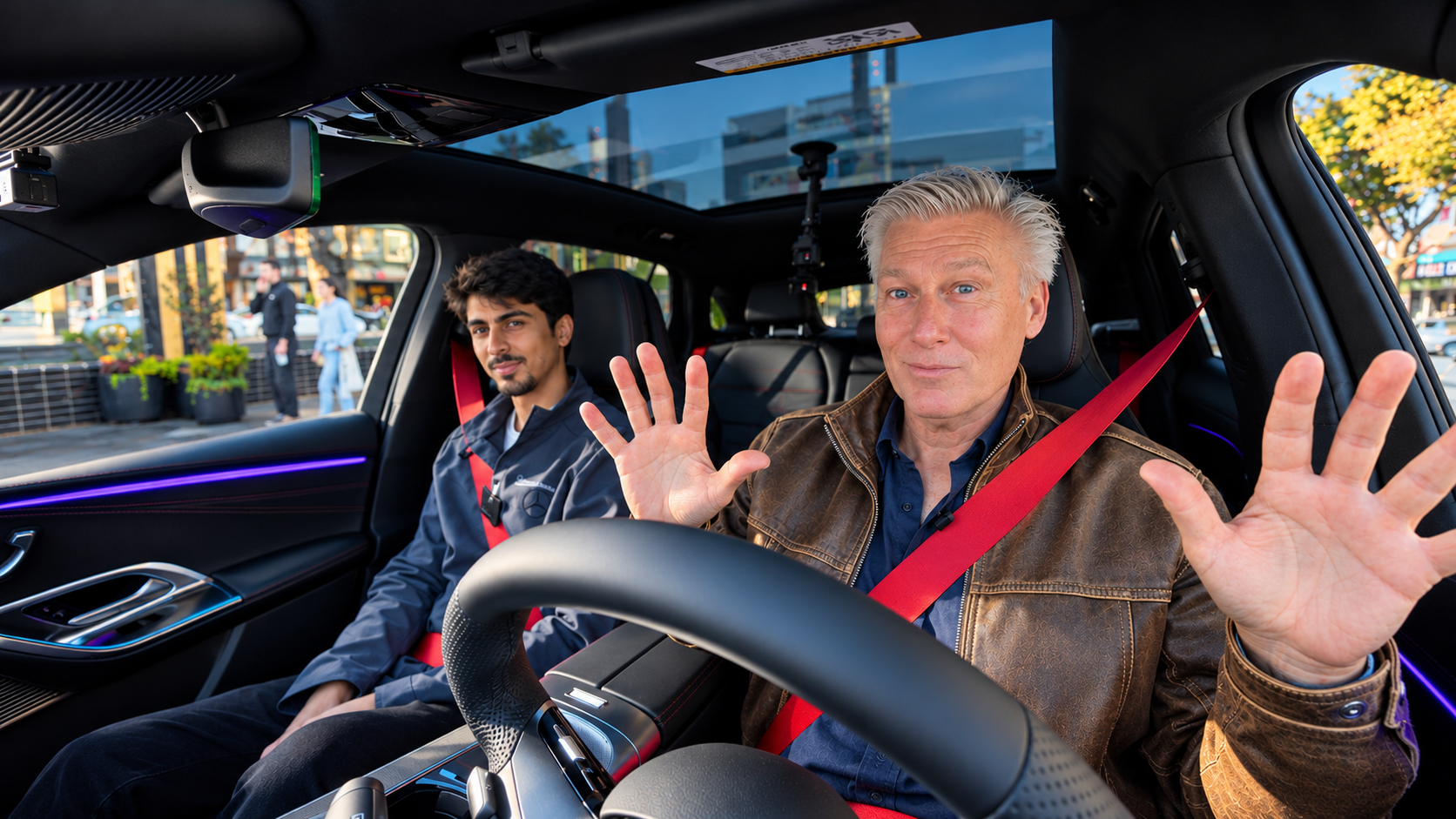
Mercedes brought me to San Francisco to experience the technology in a new all-electric GLC 400. Riding shotgun was Mercedes-Benz automated driving engineer Prem Vishal, an actual engineer who works on the system, rather than someone trained to recite the company brochure.
We spent roughly 45 minutes navigating San Francisco’s challenging urban environment. There were pedestrians, cyclists, buses, complicated intersections and the usual collection of motorists who apparently consider traffic laws more of a suggestion. Perfect conditions for testing an automated driving system.
Twenty-Seven Sensors and a Whole Lot of Computing Power
Mercedes takes a different approach than Tesla. While Tesla relies primarily on cameras for its Full Self-Driving (Supervised) system, MB.DRIVE ASSIST PRO employs 10 cameras, five radar sensors and 12 ultrasonic sensors. Information from those 27 components is processed by an NVIDIA-powered computer capable of up to 254 trillion operations per second.
That’s 254 TOPS, for those who like their computing power measured in numbers normally associated with national debt.
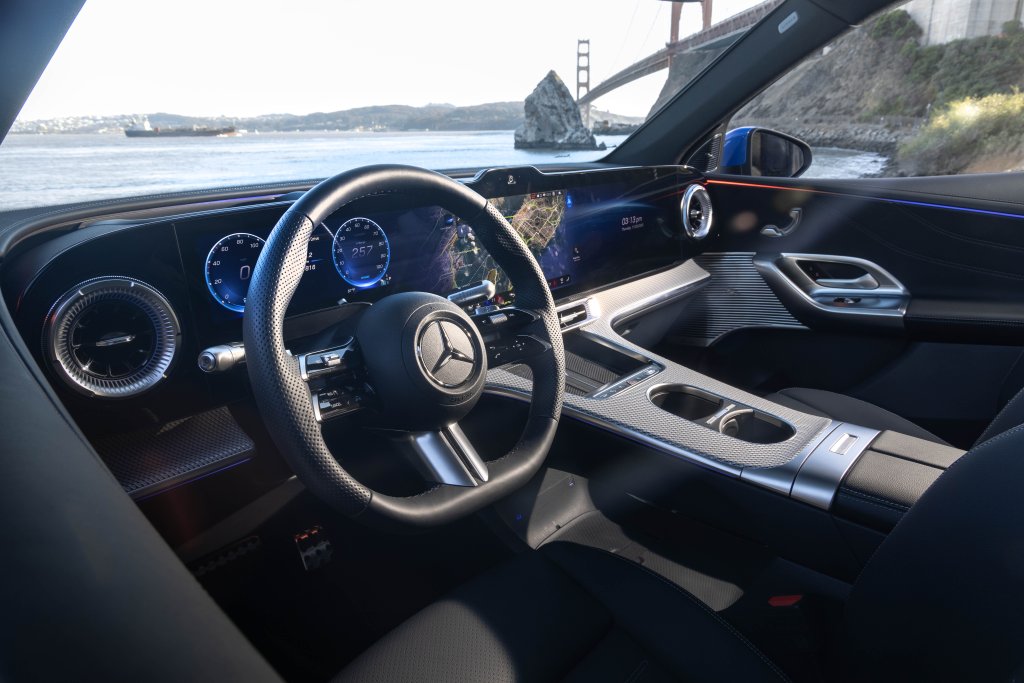
Radar and ultrasonic sensors provide additional information about the surrounding environment. Whether that translates into better performance in heavy rain, fog or snow remains to be seen. San Francisco offered none of those conditions during my test. The system makes its driving decisions onboard, while cloud connectivity supports ongoing improvements to the software.
Surprisingly Natural Behind the Wheel
MB.DRIVE ASSIST PRO is an SAE Level 2 driver-assistance system. The driver remains fully responsible, must pay attention and needs to be prepared to take control at any moment. Mercedes requires contact with the steering wheel; a light touch was enough during my demonstration, while an interior camera monitored attentiveness.
Once activated, the system navigated busy streets, made turns, changed lanes, responded to traffic signals and handled complicated intersections with remarkable composure. What impressed me most wasn’t simply what it did, but how naturally it did it.
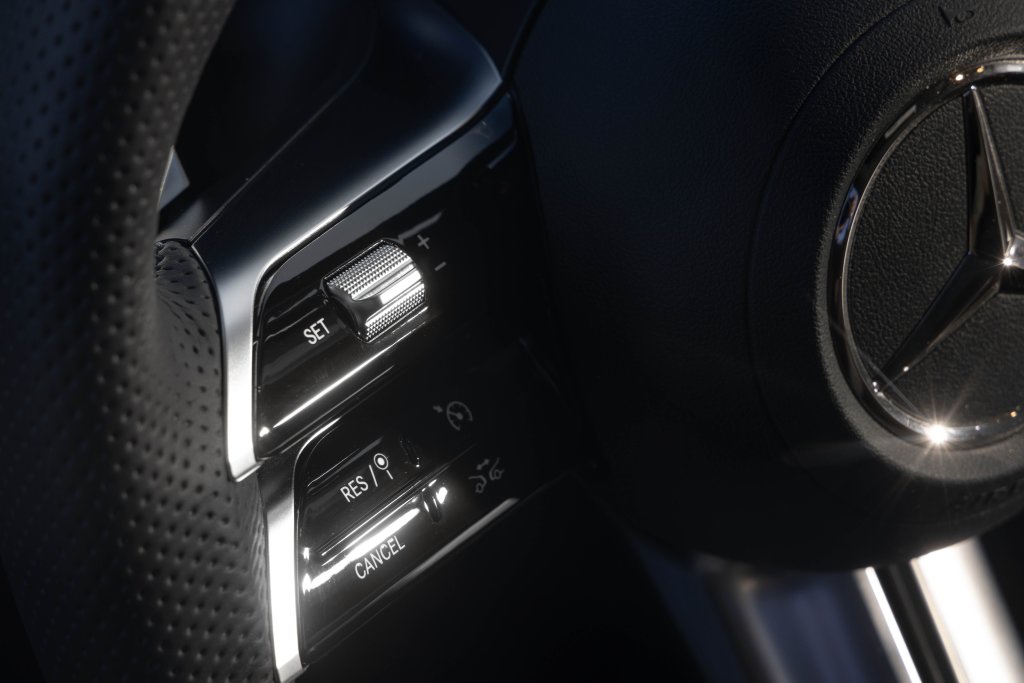
Steering inputs were smooth. Decisions were generally confident, if occasionally conservative. When I needed to intervene, the transition was seamless. There was no wrestling match with the steering wheel, no sense that the car was reluctant to surrender control. Of the advanced driver-assistance systems I’ve experienced, this was among the most natural-feeling. That’s no small compliment.
Even Robots Have Awkward Moments
The Mercedes wasn’t perfect. During one particularly awkward encounter with a stopped bus, the traffic light changed and our vehicle ended up obstructing cross traffic. Not ideal.
Then again, anyone who’s spent enough time driving in a congested city has probably found themselves in a similar predicament. Human drivers aren’t exactly batting a thousand. The important thing was how easily I could intervene and take control.
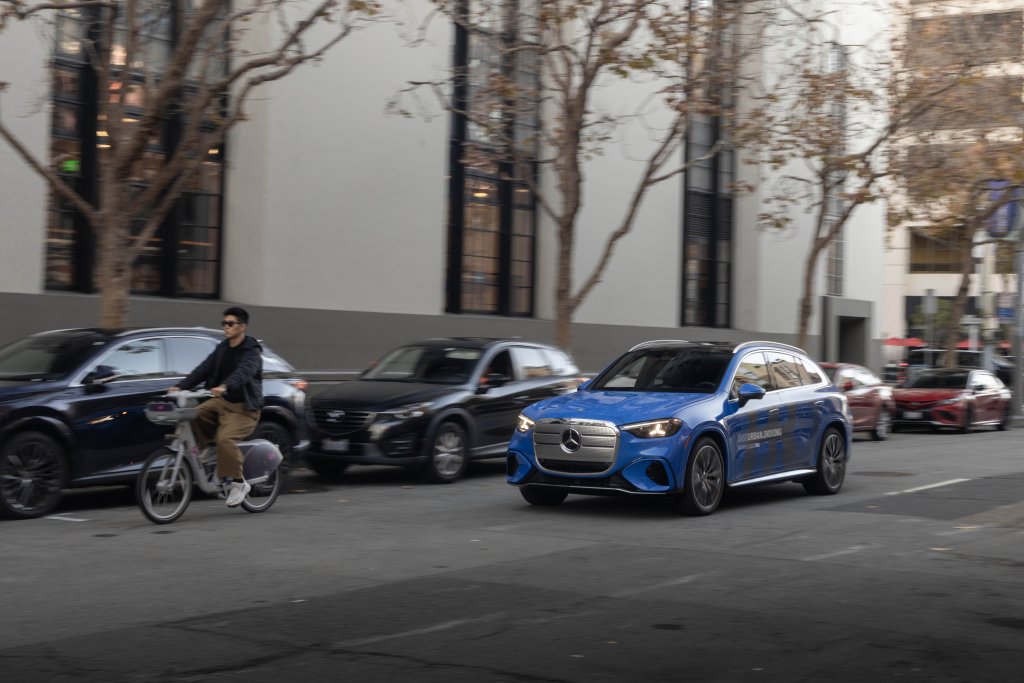
Overall, the system behaved like a competent, somewhat cautious driver. It made decisions decisively when conditions allowed but wasn’t inclined to take unnecessary chances. Very Mercedes-Benz. There’s currently only one driving personality. No aggressive mode, no setting that transforms the GLC into an impatient Manhattan cabdriver. And certainly nothing resembling Mad Max mode. Perhaps that’s for the best.
So, Is It Better Than Tesla FSD?
Here’s where things get interesting. I’ve experienced Tesla’s latest Full Self-Driving (Supervised) technology, and it deserves considerable credit. It can handle remarkably complicated driving situations and permits extended periods without hands on the steering wheel.
But I’ve also experienced moments when Tesla’s system made me uncomfortable enough to intervene with steering or braking. During my 45-minute Mercedes demonstration, I didn’t encounter anything that produced that same level of concern. Does that make Mercedes superior? Not yet.
MB.DRIVE ASSIST PRO is still in its preproduction, essentially beta stage for the American market. Mercedes expects significant refinements before its broader commercial rollout in 2027, with additional improvements delivered through over-the-air updates. A 45-minute demonstration isn’t enough to establish which system performs better across thousands of miles and countless driving conditions.
I’m fully expecting the more rabid members of the Teslerati to declare that FSD is vastly superior, perhaps before finishing this paragraph. There’s just one problem with that argument: those Tesla defenders who haven’t driven MB.DRIVE ASSIST PRO don’t actually know how the Mercedes system compares.
Watching online videos and studying specifications isn’t the same as experiencing a technology firsthand. Enthusiasm is fine. Brand loyalty is understandable. Blind allegiance to a software package seems a little excessive. Tesla has accomplished remarkable things. Mercedes deserves an opportunity to demonstrate what it can do, too. And for whatever reason, some consumers simply don’t want a Tesla. Choice. It’s a wonderful thing.
Mercedes Also Goes Hands-Free on the Highway
My experience wasn’t limited to urban driving. I also tested Mercedes-Benz Hands-Free Highway Assist in an S 580e plug-in hybrid sedan. Unlike MB.DRIVE ASSIST PRO, this system allows drivers to remove their hands from the steering wheel under appropriate conditions on compatible divided highways. Think Ford BlueCruise or GM Super Cruise.
The Mercedes system operates at speeds up to 85 mph and can help position the vehicle in the proper lane for an upcoming exit. On congested Interstate 80, it performed well, although it occasionally requested that I return my hands to the wheel when conditions became more complicated. Frankly, I appreciate a machine that knows when it would like a little help.
Both technologies remain Level 2 systems, regardless of how sophisticated their capabilities become. Neither should be confused with the Level 4 autonomous vehicles operated by Waymo in San Francisco.
Coming to a Mercedes Near You
Mercedes plans to begin offering MB.DRIVE ASSIST PRO to select California customers through an early-access program in December 2026, followed by a broader U.S. rollout in 2027. Some vehicles already have the necessary hardware installed. Eligible versions of the CLA, GLC Electric, GLE, GLS and S-Class are among the models planned to support the technology.
The system will be offered through subscription options, although Mercedes hasn’t announced pricing. For comparison, Tesla currently offers FSD (Supervised) subscriptions for $99 per month.
Mercedes also demonstrated other advanced driver-assistance technologies, including automatic emergency braking, automated parking and assistance with reversing along a previously traveled path. All impressive, but there’s only so much robotic intervention one person can absorb in an afternoon.
The Bottom Line
MB.DRIVE ASSIST PRO is one of the most impressive advanced driver-assistance technologies I’ve experienced. Its smooth operation, confident urban navigation and natural driver interaction suggest Mercedes has developed a serious competitor to Tesla’s Full Self-Driving (Supervised).
It’s still early. The software is evolving, and extended real-world testing will ultimately determine how well it performs against the competition. But after spending time behind the wheel in San Francisco, one thing seems clear: Tesla no longer has this particular conversation to itself.
And competition tends to make everyone better. Even the Teslerati might eventually appreciate that.
Watch the video for the extended demonstrations, including successes and shortcomings. Watch on YouTube.
Editorial note: The video has been condensed for length, but the significant successes and shortcomings of the demonstrations are represented.
Disclosure: Mercedes-Benz provided transportation and lodging for this report.